Alligator Cracks in Your Driveway: Patch or Replace?
by Hanna Carolina · 5 min read
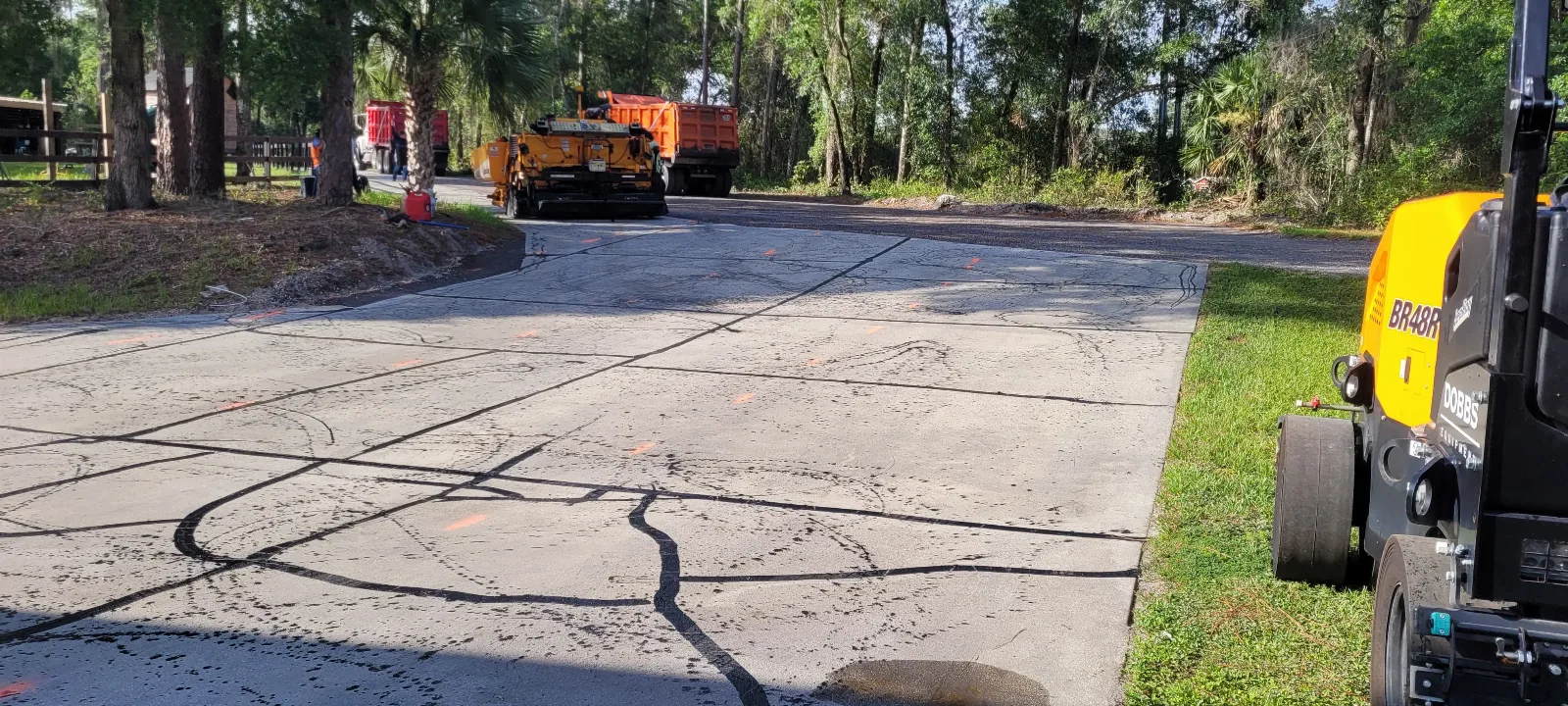
If the cracking is spread across most of the driveway and the cracks are wider than about a quarter of an inch, the surface comes out. Isolated damage sitting over a base that is still solid can be cut out and rebuilt. That width and that spread are the whole decision, and a contractor should be able to show you both on your own driveway.
Plenty of quotes skip that conversation and go straight to a replacement number. If you want somebody to walk it with you first, reach out to our team or call (386) 215-7466. We would rather patch it and be called back in eight years than sell you a driveway you do not need yet.
What are alligator cracks telling you?
That the layer underneath is moving. Alligator cracking gets its name from the pattern, interlocking pieces that look like reptile skin, and it forms when asphalt flexes under load instead of being held up. Straight cracks running the length of a driveway are a surface aging. A web of them is structural, and it means the base has stopped doing its job.
This matters because the two problems get fixed differently and cost very differently. Sealer or crack filler poured over alligatoring buys a few months of appearance and nothing else, since the movement underneath continues. Anyone who quotes a seal coat for a driveway in that condition is either not looking closely or is happy to be back next year.
Where the pattern shows up tells you something too. Alligatoring that appears only in the wheel paths, or only where a truck parks, usually means the base failed under load in that spot. Cracking spread evenly across the whole driveway more often points at the surface having been laid too thin from the beginning.
How does a proper patch actually get done?
Not by filling the hole. A real repair means cutting around the damaged area to a clean edge, taking out all the broken asphalt, and digging down into the base to remove whatever failed underneath. Then new base material goes back in and gets compacted in six inch lifts, and two inches of asphalt goes over the top. The patch is built the way the driveway should have been.
That is more work than most people expect a pothole repair to be, and it is why some repairs cost more than a homeowner assumes. It is also why they last. A patch that skips the base and just puts asphalt in the hole will sink or break apart again inside a year, because nothing was done about the reason the hole appeared. Our page on crack filling and asphalt repairs covers the method in more detail.
Hot crack filling is the other half of this. Cracks that are still narrow and linear get sealed so water stops travelling down them, which is cheap maintenance and buys years if it happens before the crack widens.
When does patching stop making sense?
When you are patching in several places at once. One or two failed areas over a sound base is a repair job. Half a dozen scattered across the driveway means the base is failing generally, and every patch is a separate mobilization for the same underlying problem. At that point the arithmetic stops working and full driveway paving is the cheaper answer over any reasonable horizon.
Width is the other trigger. Once alligator cracks open past roughly a quarter of an inch, water is getting to the base freely with every storm, and Central Florida delivers those most afternoons through the summer. A driveway in that condition is degrading between visits rather than holding steady, so patching becomes a way of spending money slowly on the same eventual outcome.
A contractor should be willing to say which side of that line your driveway sits on and why, while standing on it with you. If the answer is a number with no explanation attached, ask for the explanation.
What does replacing the driveway involve?
Taking the old asphalt out entirely, checking and rebuilding the base underneath, then laying two full inches of new asphalt and compacting it. Grading gets corrected at the same time so water leaves the surface instead of standing on it, which is often part of why the original failed. Done that way, a driveway here runs ten to fifteen years.
At M&S Asphalt Paving the base is priced as its own line, so you can see what you are paying for rather than reading one lump sum. Juan has twenty two years in asphalt, including DOT road work, and everything we quote gets explained before anybody starts. You can see finished jobs on our project photos page.
If your driveway is cracked and you genuinely do not know which job it needs, that is the normal position to be in. Get in touch here or call (386) 215-7466 and we will come look. Estimates are free, they usually go out same day or next, and there is no obligation on the end of them.