Asphalt Paving & Sealcoating in Daytona Beach, Florida
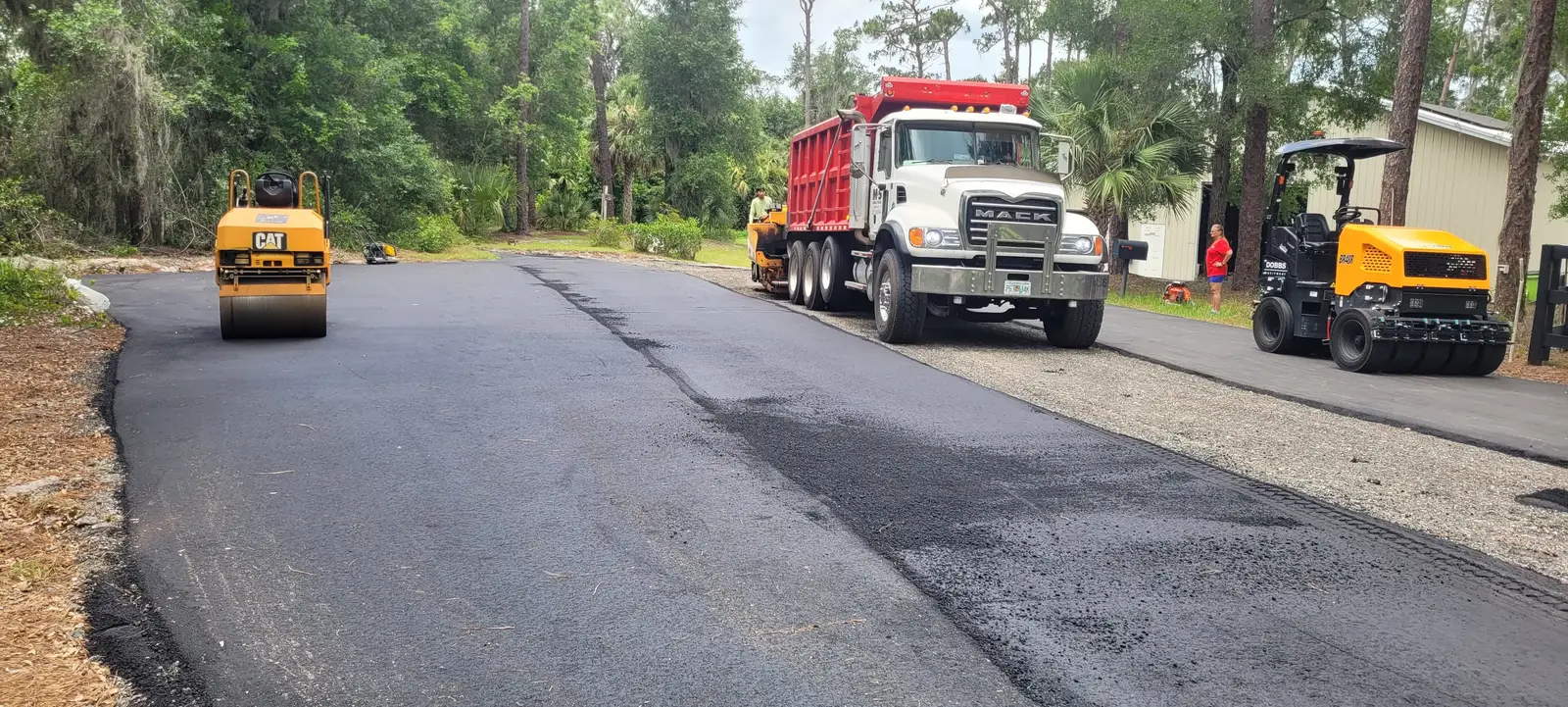
Coastal conditions make protecting asphalt more important in Daytona Beach than almost anywhere inland. M&S Asphalt Paving works throughout the area paving and sealing driveways, parking lots, and commercial surfaces, built on a real base at full thickness. We are based in DeLand, a short drive away, licensed, insured, and BBB accredited.

A Harsher Environment for Asphalt
Why does salt air near Daytona Beach matter for asphalt?
Salt air and coastal humidity speed up the oxidation that ages asphalt, so pavement near the beach needs protection sooner than pavement inland. The same salt and moisture that corrode metal near the coast attack an unsealed asphalt surface too, drying and breaking down the binder that keeps it flexible. A driveway in the beachside neighborhoods along A1A, a few blocks off the ocean, will gray out and start to ravel faster than the same driveway would further inland. There is no work-around for that. The environment is just harder here.
That is exactly why driveway sealcoating carries so much weight in this area. A seal every couple of years puts a protective barrier between the salt air and the asphalt binder, and it costs far less than letting the surface fail. When we build new pavement in Daytona Beach we still start with a compacted crushed concrete or lime rock base at full two-inch depth, because a strong surface holds up better against a harsh environment. Coastal conditions do not forgive shortcuts at the foundation level any more than they forgive a missed sealcoat. You build it right and protect it on schedule, or you replace it sooner than you should have to.
Inland Driveway (e.g. DeLand)
Standard Wear Rate
- UV oxidation primary threat
- Sealing every 2 to 3 years typical
- Gray-out develops gradually
- Binder dries over several seasons
- 10 to 15 year surface life achievable
Coastal Driveway (A1A area)
Accelerated Wear Rate
- UV plus salt air plus humidity
- Sealing closer to 2-year cycle
- Gray-out and raveling appear faster
- Binder breaks down from combined attack
- Surface life shortened without sealing
What We Do in Daytona Beach
What paving and sealing services do you offer in Daytona Beach?
We cover the full range in Daytona Beach, from new driveways to commercial sealcoating, with protection as the priority given the coastal setting. Homeowners near International Speedway Boulevard and the surrounding residential neighborhoods call us for new or replacement driveway paving when a surface has failed, and for sealcoating when it is still sound but needs shielding from the salt air. The honest read is part of the service. If a driveway can be protected with a seal, we say so. If it has broken down from the base up, we say it needs paving rather than selling a coat that hides the problem for a season.
Driveway Paving
New and replacement driveways built on a compacted base at two full inches. Base-first construction is non-negotiable near the coast, where shortcuts surface failures quickly.
Driveway Sealcoating
Crack filling first, then a full protective coat. The most cost-effective thing a Daytona area property owner can do for existing asphalt. Blocks salt air, UV, and rain from reaching the binder.
Asphalt Repair
Potholes saw-cut to clean edges, base rebuilt in six-inch lifts, new asphalt compacted in. Crack filling before any sealcoat, so the coat is protecting a sound surface, not hiding damage.
Commercial and Beachside Lots
Do you work on commercial and beachside parking lots in Daytona?
Yes. Commercial work in Daytona Beach carries a specific challenge that inland lots do not face at the same scale. Tourism traffic near the Daytona International Speedway and along the beachfront draws steady, concentrated vehicle wear on retail, hotel, and restaurant lots. That constant load combined with salt air and humidity means surfaces here need attention on a shorter clock than a comparable lot in a dry inland city. Race weeks alone push more traffic through those parking areas in a few days than most inland lots see in months.
For most Daytona commercial property owners, the cost-effective package is crack fill, seal, and restripe. It restores the surface protection and the appearance of a lot for far less than a full resurfacing, and it adds a protective coat against the salt at the same time. When a lot has genuinely worn out, mill and overlay is the honest answer and we say so rather than running a sealcoat that will not hold on a failed surface.
Timing matters more near the water. Coastal humidity slows how fast a sealcoat cures, so we schedule that work for a dry stretch with enough time for the surface to set before traffic returns. Rushing a coat on a damp Daytona morning is how it fails to bond, and we would rather do it once correctly. Larger lots and lots that need commercial asphalt paving from scratch get the same treatment.
Crack Fill, Seal, and Restripe
The standard package for a lot that is still structurally sound. Restores protection and appearance, adds years before overlay is necessary.
Mill and Overlay
When the surface has worn past sealing but the base is still sound. Worn layer milled off and replaced with fresh asphalt, matched to grade.
New Lot Construction
Built on a compacted base at commercial depth. Coastal conditions mean the base cannot be skimped, and we do not skip it.
Pothole and Crack Repair
High-traffic entry points and loading areas rebuilt to commercial spec so the repair holds under the same load that caused the original failure.
ADA Striping and Fire Lanes
Accessible spaces, access aisles, and fire lane markings applied correctly after every seal job. Tourism-area lots need this legible and compliant.
Staying Ahead of Coastal Wear
How often should Daytona Beach pavement be sealed?
Plan on sealing Daytona area pavement on the closer end of the two to three year range, because the coast is harder on asphalt than inland areas. Salt air, humidity, and full sun push oxidation faster, so a surface here reaches the point where it needs protection before an identical one further inland would. The gap between needs a seal and needs to be replaced is narrower near the beach than it is in DeLand or Deltona.
We look at the surface rather than a fixed calendar. If the color has faded from black to gray, if fine cracks are spreading, or if water soaks in rather than beading up, it is time. Those signals appear sooner in a coastal environment. Sealing on a sensible schedule is cheap insurance against the far bigger cost of repaving, and near the beach that insurance matters more than it does inland.
Weather planning is part of the service. We schedule sealcoating around Daytona's coastal humidity patterns so a fresh coat has enough dry time to cure properly before traffic returns or a storm rolls in. Call us and we will give you a realistic timeline for your specific surface and its exposure.
Surface Has Gone Gray or Faded
The binder oxidizing out is the first signal. Near the coast it happens faster and on a shorter cycle than you may expect from experience inland.
Water Soaks In Instead of Beading
A sealed surface sheds water. When it absorbs instead, the surface has lost its protection and fine cracks will follow soon after.
Fine or Hairline Cracks Spreading
Salt air accelerates crack growth once it opens. Catch these early with crack fill and a seal rather than waiting until they require structural repair.
Rough or Sandy Texture
Aggregate raveling out of the surface means the binder has weakened. Seal before the raveling progresses and the surface has to be replaced.
Two or More Years Since Last Seal
In Daytona's coastal climate, two years is a reasonable prompt. Have someone look at it and give you an honest read before you need it rather than after.
Ready for an estimate in Daytona Beach?
Call and describe the project. New driveway, a parking lot that needs attention, potholes, or a surface due for sealing. We will usually have a quote back same day or next day, and we will tell you honestly what your pavement actually needs given the coastal exposure it has been dealing with.
Call us today (386) 215-7466