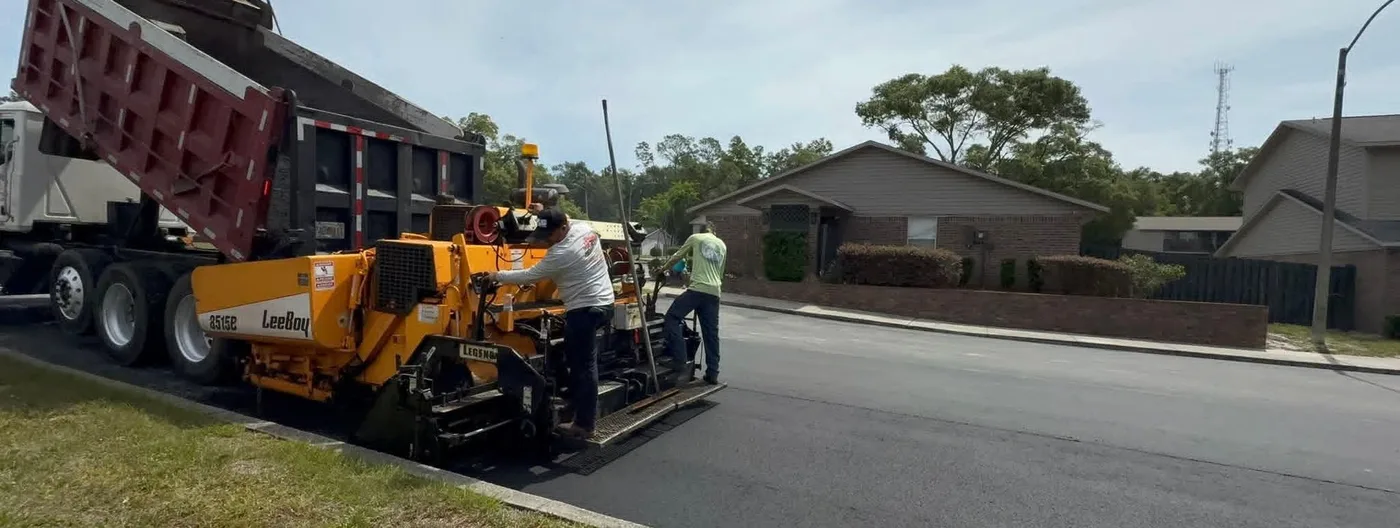
Asphalt Sealcoatingin DeLand, Florida
Sealing is the cheapest way to add years to pavement you already own. M&S Asphalt Paving seals driveways, parking lots, and private roads across DeLand and the surrounding area as real protection, not a quick cosmetic coat. And we will tell you honestly when a surface is past sealing and needs repair instead.

What Sealing Actually Does
What does asphalt sealcoating protect against?
Sealcoating is protection, not paint. New asphalt is dark and flexible because of the binder that holds the aggregate together. Sun and heat cook that binder over time. The surface turns gray, gets brittle, and starts to crack. Rain then works into those cracks, and in Central Florida, with as much summer rain as this area sees, that is a fast road to real damage.
A fresh sealcoat puts a protective layer over the surface that blocks the weather before it reaches the binder. Think of it like paint on wood. The asphalt underneath is the expensive part. Sealing is the low-cost layer that keeps the weather off it. Done on schedule, it is the single most cost-effective maintenance you can do for pavement you already own.
We also seal against fuel and oil drips that soften asphalt in driveways and parking spaces. All four threats below are at work in Florida's climate, and a properly applied sealcoat slows all of them.
UV and Heat
Florida's sun oxidizes the asphalt binder faster than most climates. Sealcoating reflects UV before it reaches the surface.
Rain Infiltration
Water soaking into hairline cracks is what turns minor surface wear into base damage. A sealed surface sheds water instead of absorbing it.
Fuel and Motor Oil
Petroleum-based drips break down the asphalt binder in driveways and parking stalls. Sealcoating gives those spills a surface to sit on rather than soak in.
Oxidation Over Time
Bare asphalt oxidizes and ravels gradually even without obvious damage. Sealing on a regular schedule slows the aging process and pushes repaving back by years.
Timing It Right
How often should you seal asphalt in Florida?
Plan on sealing every two to three years in Central Florida, sometimes sooner for surfaces in full sun or heavy traffic. Our climate is harder on asphalt than cooler, drier regions. The combination of intense UV and frequent heavy rain speeds up oxidation in a way that makes the standard national guidance too conservative for this area.
A driveway that bakes in the sun all day will gray out faster than one shaded by trees. A busy parking lot wears its seal off sooner than a quiet residential drive. We look at the surface rather than the calendar, because the right answer depends on the specific pavement in front of us.
Sealing too often wastes money, and we will tell you if you are early. Sealing too late means the damage is already done and a coat of sealer cannot undo it. We would rather put you on a sensible schedule than sell you a coat every year you do not need.
Surface has gone gray or faded
The black color oxidizing out is the first visible signal the binder is drying
Fine or hairline cracks appearing
Early cracking means water is about to find a way in; seal before it does
Water soaks in instead of beading
If rain no longer rolls off, the surface has lost its protection
Surface feels rough or sandy underfoot
Aggregate raveling out of the surface means the binder is already weakened
It has been three or more years since the last seal
In Central Florida's climate, that is a reasonable prompt to have someone look at it
How We Work
Do cracks need to be filled before sealing?
Yes, always. Sealcoat is a thin protective layer, not a crack filler. If you coat over an open crack without filling it first, water still gets in and the crack keeps growing under the fresh black surface. Our process runs in order: clean the surface, fill the cracks so they are sealed against water, then apply the sealcoat over a sound surface. On commercial lots the crack filling step is where a large share of the real protection comes from.
Clean the Surface
All debris, vegetation in cracks, and loose material removed. Sealcoat bonds to clean asphalt, not dirt.
Fill Every Crack
Open cracks sealed with the right material so water cannot get in underneath the new coat. This step decides whether the protection is real.
Apply the Sealcoat
Full coverage over the entire surface. We watch the forecast and avoid laying sealcoat ahead of afternoon rain so it cures properly.
Restripe (Commercial)
Stalls, fire lanes, arrows, and ADA spaces painted after the seal cures. Residential driveways are ready to use within 24 hours.
New Surfaces and Weather
How soon can you seal a new asphalt surface?
New asphalt needs to cure before its first sealcoat, and in Florida that usually means waiting several months, not days or weeks. Fresh asphalt still has oils in it that need time to harden and stabilize. Sealing too early traps them and causes problems that show up later.
The exact timing depends on the mix, the thickness, and the weather. We give a specific window for each new surface rather than a generic rule. Once the first seal is on, you fall into the regular two-to-three-year rhythm. And weather decides the day we seal. Sealcoat needs dry conditions and time to set, so we watch the forecast and avoid laying it right before one of Central Florida's afternoon storms. That patience is part of doing it right, not a scheduling inconvenience.
If you have a new driveway or lot and want to know when it is ready for its first seal, call and we will walk you through the schedule. New paving and the sealing schedule that follows it go together, and we plan for both from the start.

New Surface Cure Time
Several months minimum in Florida's climate before the first sealcoat. Exact timing given per surface, not by a generic rule.

We Work Around the Forecast
Sealcoat needs dry conditions to set. We do not lay it ahead of afternoon rain. Scheduling around weather is standard practice, not a delay.

Regular Maintenance Cycle
After the first seal, plan for every two to three years. We can put you on a schedule so you are not guessing when the next one is due.

Residential: 24-Hour Cure
A sealed driveway needs to stay clear for about a day. We time the job so the surface is ready before the next morning's routine starts.
Where We Work
Where does M&S Asphalt Paving work?
We are based in DeLand and work across Volusia and Seminole counties and the north Orlando area. Being local matters more than it sounds. We know how the sandy soil around here behaves under a base, how the salt air near the coast speeds up oxidation, and how much afternoon rain a fresh sealcoat has to dodge in summer. When you hire a crew that drives these roads every day, you get someone who can be on site quickly and who is easy to reach afterward under the warranty.
Your town not listed? Call us at (386) 215-7466. We travel for the right project.
Wondering if your pavement is due for sealcoating?
Call us, describe what you are seeing, and we will come look at it. We will tell you honestly whether the surface is ready to seal, whether it needs crack repair first, or whether it has gone past sealing and needs paving. Most estimates go out same day or next. No pressure, no upsell to work you do not need.
Call us today (386) 215-7466