How Often Does a Florida Driveway Actually Need Sealcoating?
by Hanna Carolina · 5 min read
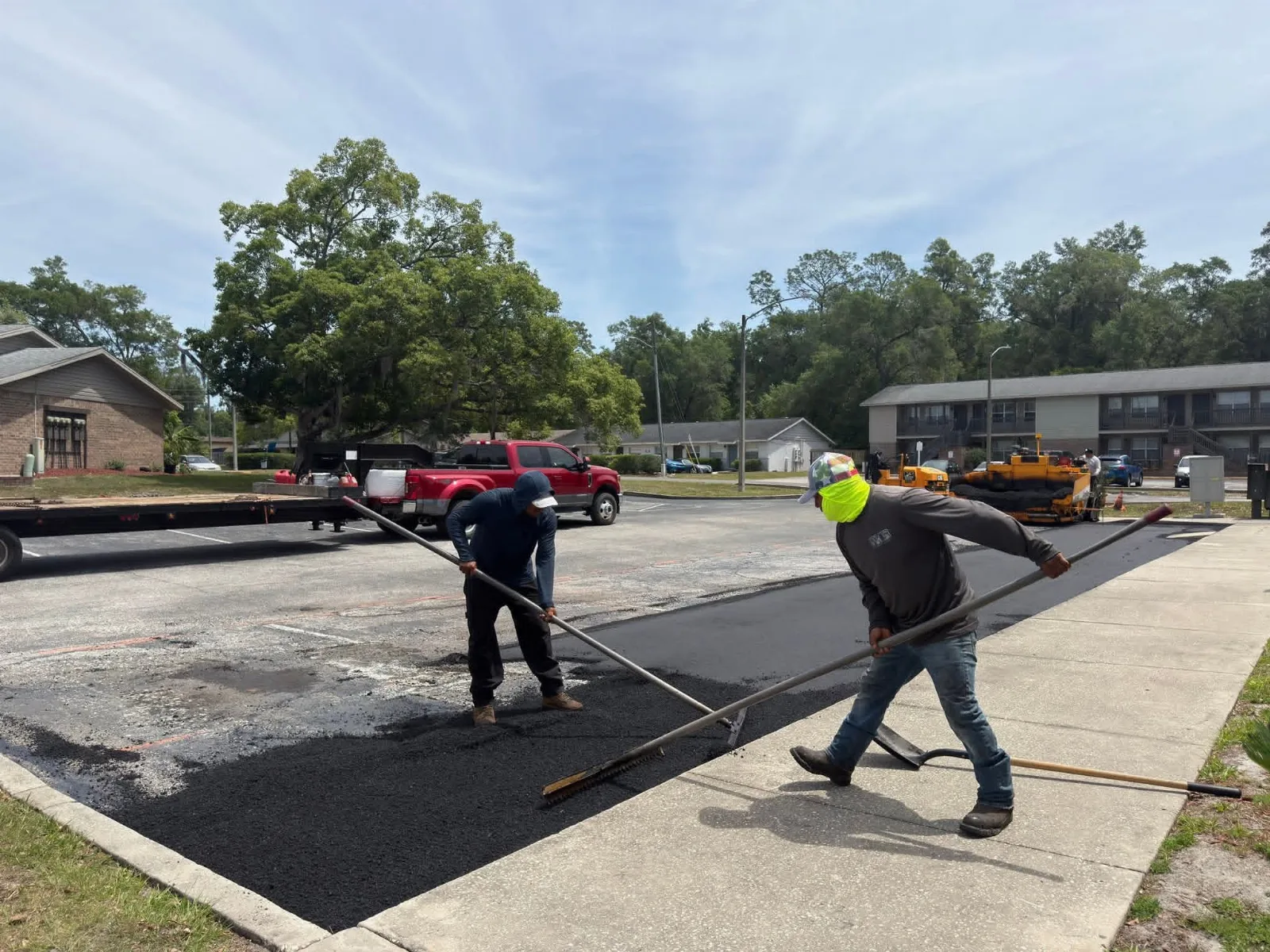
The first coat goes down six to twelve months after the asphalt is laid, then roughly every two to three years after that. Florida runs a shorter interval than most of the country because the sun and the afternoon storms age a surface faster here. Waiting until a driveway looks bad means you have already waited too long.
Timing is most of the value, and getting it wrong in either direction wastes money. If you are not sure where your driveway sits in that cycle, reach out to our team or call (386) 215-7466. We will tell you whether it needs sealing now or next year.
What is sealcoating actually protecting against?
Weather, and specifically the two things Florida has plenty of. Juan describes it simply: sealcoating protects the asphalt from the weather and gives the surface more lifespan. Sun breaks down the binder that holds the aggregate together, which is what turns a black driveway gray and makes it brittle enough to crumble at the edges. Water is the other half, working into any opening and down toward the base.
A seal coat puts a sacrificial layer over the top so the sun and rain work on that instead of on the asphalt itself. It is maintenance in the same category as painting exterior trim. Nobody paints trim because it has rotted. They paint it so it does not.
Vehicle fluids matter more than people expect. Gasoline and oil soften asphalt binder directly, so the spot where a car parks and drips ages faster than the rest of the driveway. A sealed surface gives those drips something to sit on top of rather than soak into.
Why is the first coat six to twelve months after paving?
Because fresh asphalt needs time to cure before anything goes over it. Seal a driveway too soon and the oils still working their way out of the new surface have nowhere to go, and the coat does not bond properly. Six to twelve months gives it long enough to harden without leaving it exposed through a full summer and a full rainy season unprotected.
After that first coat the interval settles into roughly every two or three years, adjusted for what the driveway actually takes. A driveway under heavy shade holds up differently from one in full sun all day. Put a work truck on it and the interval shortens again. A driveway that never sees anything heavier than a sedan can often stretch to the far end of the range. Anyone quoting a fixed schedule without first asking what parks on it is guessing.
Our driveway sealcoating page has the full schedule and what each visit includes, since cracks get filled before any sealer goes down.
Is it worth paying somebody instead of doing it yourself?
Sometimes not, and it is fair to say so. A small driveway in good condition can be done with a bucket and a squeegee if you have a free weekend and do not mind the mess. What you are buying from a contractor is coverage rate, the crack filling that should happen first, and the judgment about whether sealing is even the right move this year.
The failure mode with a home job is usually applying too thin, or skipping the crack filling and asphalt repairs that should happen first. Sealer poured across an open crack follows it straight down and disappears, so the crack is still there under a cosmetic layer. On a larger driveway, or one with cracking already started, the labor and the material add up close enough that hiring it out stops being a luxury.
If a contractor tells you a seal coat will fix cracking, that is the point to get another opinion. Sealer protects a sound surface. It does not repair a failing one, and anybody selling it that way is selling.
When is a driveway past sealing altogether?
Once the cracking has spread into an interlocking web and the cracks are wider than about a quarter of an inch. That pattern means the base underneath is flexing, and sealing the top of it is cosmetic. Money spent there buys appearance for a season and changes nothing about what is happening two inches down.
Between those extremes there is a middle ground worth knowing about. Isolated failed areas can be cut out and rebuilt while the rest of the driveway is still perfectly good, and then the whole surface gets sealed. Repairing and sealing together is usually far cheaper than treating the driveway as a single failed surface.
At M&S Asphalt Paving we would rather tell you to wait a year than sell you a coat you do not need. Juan prices a job after standing on the surface, never over the phone. Get in touch here or call (386) 215-7466 and we will tell you where your driveway is in the cycle. Estimates are free and usually go out same day or next.