Mill and Overlay, or Tear It Out? What Your Parking Lot Actually Needs
by Hanna Carolina · 5 min read
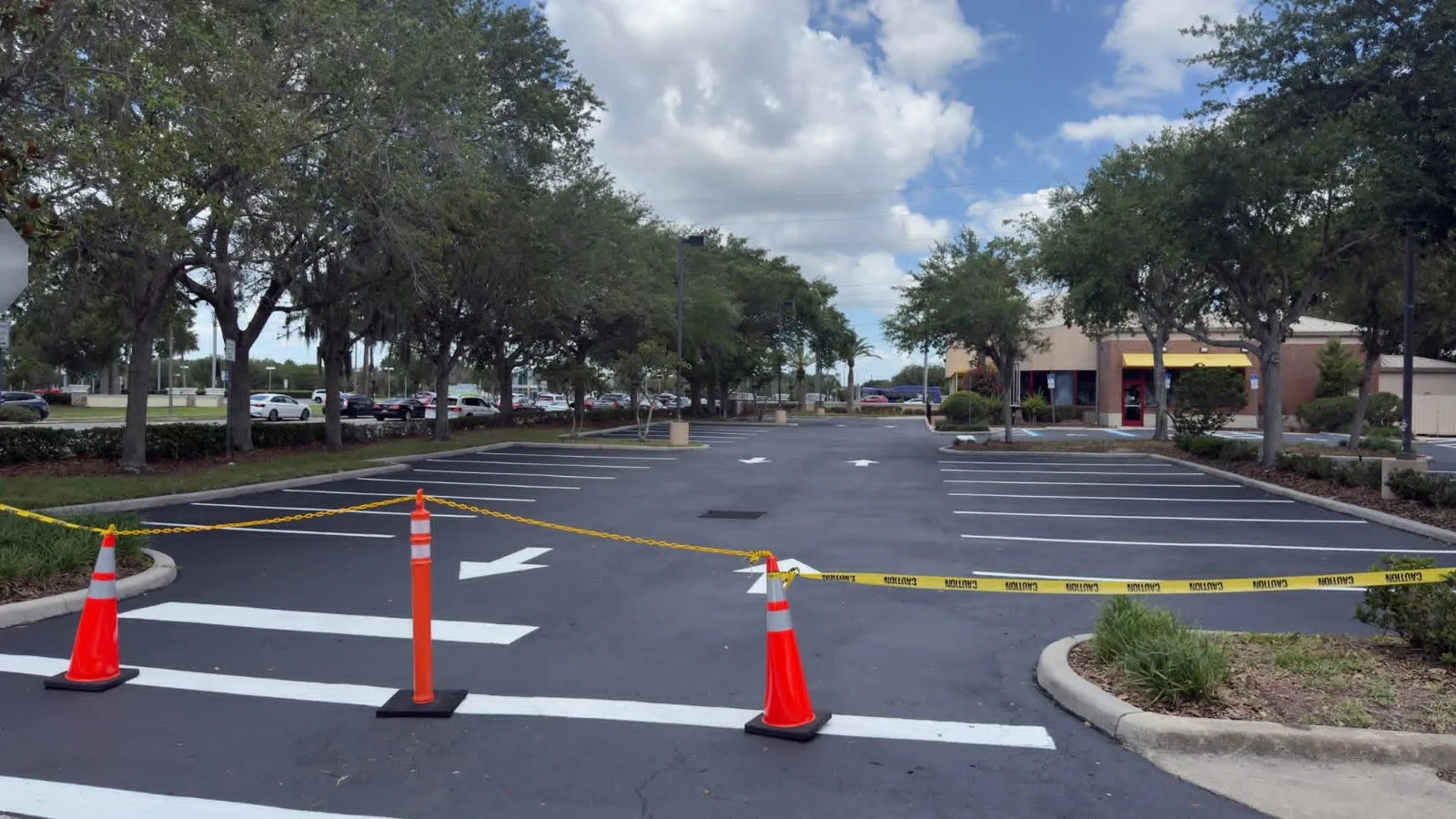
The base decides it. If the compacted rock under the lot is still solid and the damage is confined to the asphalt on top, milling that layer off and overlaying it works and costs less. Once the base itself is moving, an overlay cracks straight through and you have paid for a surface twice.
Which is why two contractors can look at the same lot and quote jobs that are not remotely comparable. If you are holding two numbers and cannot tell what accounts for the gap, send them over to us or call (386) 215-7466. We will read both and tell you what each one is actually buying you.
Why do two quotes for the same lot come in so far apart?
Usually because they are quoting different jobs and neither one says so on the page. One contractor has priced milling off two inches and laying two inches back. The other has priced excavating the whole thing, rebuilding the rock base, and paving over it. The second number is much larger because the second job is much larger, and the sheet in front of you may describe both as resurfacing.
There is a third possibility that is worth knowing about. Some quotes are cheap because they skip the milling and simply add an inch and a half of new asphalt on top of the old surface. That raises the grade of the lot, which throws off the drainage and buries your curbs, and it does nothing at all about whatever caused the old surface to fail. It looks like a bargain for about two years.
At M&S Asphalt Paving we price the base as its own line so the comparison is possible. When two estimates disagree by tens of thousands, that line is nearly always the reason.
How do you tell whether the base has failed?
Look at the shape of the cracks. Straight ones, running with the traffic or along an old paving joint, are the surface aging. Cracking that has broken into interlocking pieces, the pattern people call alligatoring, means the layer underneath is flexing under load and the asphalt is bending until it breaks. That is a base problem and no amount of new asphalt on top will fix it.
Standing water is the other tell. A puddle that is still there hours after a storm means the lot no longer drains where it was built to drain, either because the surface has settled or because it was never graded properly to begin with. Water sitting on asphalt works its way down through it, and once it reaches the base it softens the rock and the cycle accelerates.
Potholes tell you the same story in a more advanced form. By the time a hole has opened, the base under that spot is already gone, which is why a proper repair means digging out the failed material rather than filling the hole with fresh asphalt. Our page on crack filling and asphalt repairs walks through how that is done.
Why does a new overlay sometimes crack within a year?
Because the cracks underneath came back through it. Asphalt laid over a cracked surface will telegraph those cracks up to the new one within a season or two, in exactly the same pattern, since nothing addressed what was moving. Contractors know this happens. That is why milling matters. A competent quote either removes the damaged layer or explains why it does not have to.
The same thing happens when only the top gets attention on a lot whose real problem is drainage. Water that had nowhere to go still has nowhere to go, and it will find the weakest point in the new surface within a year. Fixing grade and drainage first is unglamorous work. It is also the difference between an overlay that lasts ten years and one that lasts two.
Where a lot genuinely needs rebuilding, that is what we quote, and where it does not, we say so. Full commercial asphalt paving work is the right call less often than the industry sells it.
What should you ask before you choose between them?
Ask each contractor to walk the lot with you and point at what they are basing the recommendation on. Ask whether the base is being touched, and if not, why they believe it is sound. Ask how many inches come off and how many go back on. Ask what the warranty covers and what it excludes, since a one year warranty on material backed by somebody local is worth more than a longer one from an outfit that will sell your job to a subcontractor.
Juan has twenty two years in asphalt, eight of them running this company, and he spent part of that as a foreman answering for finished surfaces. He prices a lot after standing on it. If you want a straight read on whether yours needs milling or rebuilding, get in touch here or call (386) 215-7466. The estimate is free, it usually goes out same day or next, and nothing is owed at the end of it.