What Should an HOA Board Ask Before Approving a Paving Bid?
by Hanna Carolina · 5 min read
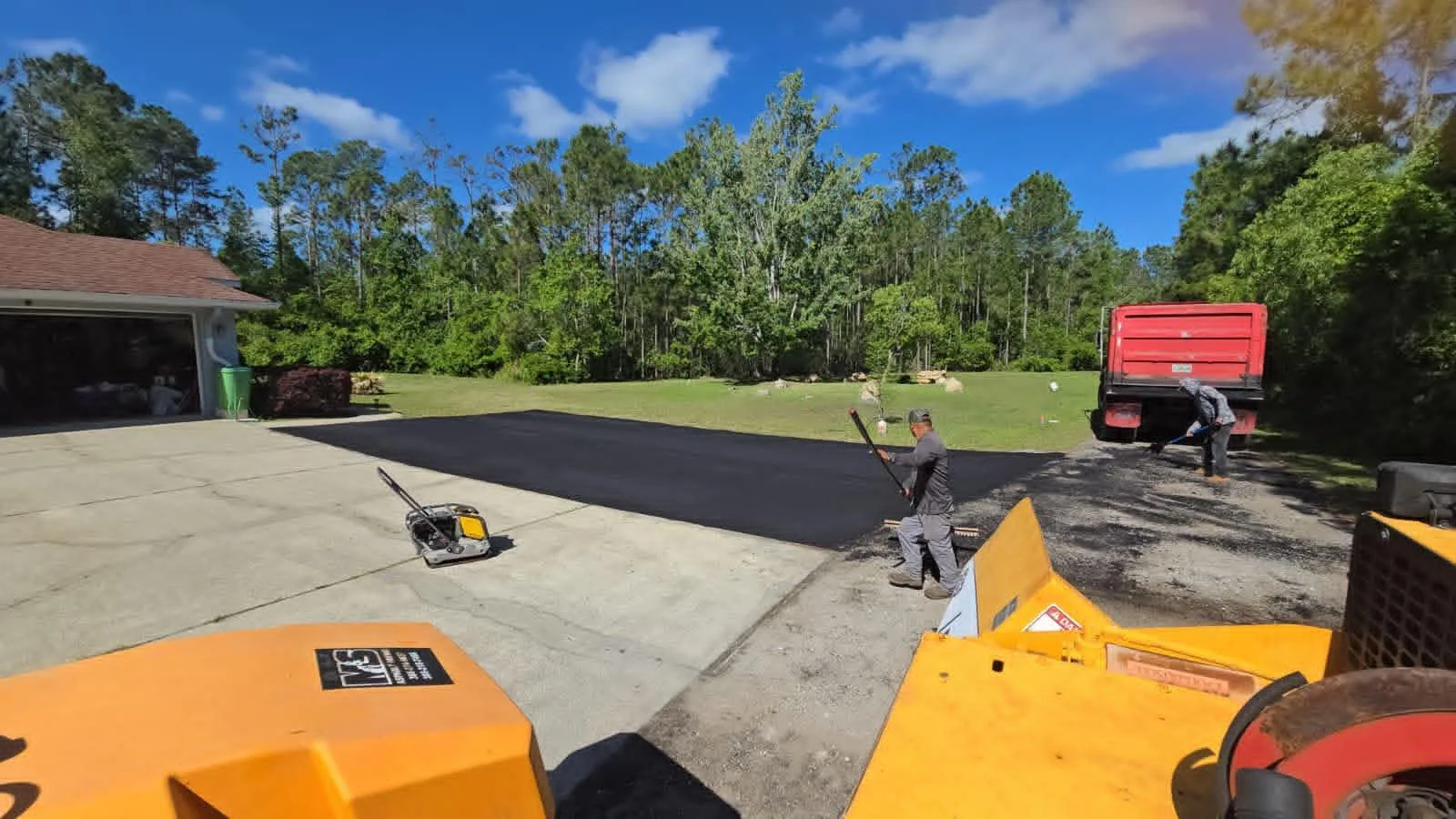
Four things: what the base is made of, how many inches of asphalt you get after compaction, what the warranty actually covers, and who will physically be on the property. Bids that look thousands apart usually differ on those answers rather than on anything you could see in the finished surface.
A board is spending money that belongs to the residents, and it has to be able to explain the decision afterwards. If you want somebody to read the bids with you before the vote, reach out to our team or call (386) 215-7466. We will tell you what each one is buying, including where ours sits.
Why do bids for the same community come in thousands apart?
Because the specification is usually written loosely enough that two contractors can bid two different jobs against it. A scope that says resurface the roadways leaves the base, the thickness and the prep entirely to the bidder. One outfit prices a full rebuild. Another prices an inch and a half over what is already there. Both are answering the document in front of them.
The gap is almost never workmanship, which is the thing boards tend to ask about. It is material and depth, and neither is visible once the job is finished. A road built on compacted crushed concrete or lime rock and one laid straight onto dirt look identical the week the crew leaves. They stop looking identical somewhere in year three.
At M&S Asphalt Paving we break the base out as its own line for exactly this reason. If one bid on your table does not have that line, the board is not comparing like with like, whatever the totals say.
What should the specification say about base and thickness?
Name the material and name the depth. The base should be a compacted crushed concrete or lime rock road base, placed in lifts and rolled between each one, because a single thick layer of rock does not compact all the way through. Asphalt depth should be stated as the depth after compaction, since loose material loses height under the roller and a crew that spreads two loose inches leaves you with about an inch and a half.
Community roadways and parking areas usually need more than a residential driveway does, because the loads are heavier and more constant. Trash trucks, delivery vans and moving trucks are what actually decide the specification, not the number of cars. Any contractor worth hiring will ask what traffic the roads carry before quoting a depth, and one who quotes without asking has not thought about it.
Write the numbers into the scope before the bids go out and the whole exercise gets easier. Our page on commercial asphalt paving sets out what we build for HOA roads and lots, and a board is welcome to lift the language straight into its own document.
What does a paving warranty actually cover?
Less than most boards assume. Ours runs a year on material, which means that if the asphalt itself fails in a way asphalt should not fail, we come back and deal with it. It does not cover a tree root lifting a section, a delivery truck parking on a surface in July heat, or damage from something the community did after we left. Every warranty in this trade has a list like that.
So ask for the exclusions in writing rather than the headline length. Three years of coverage that applies only to manufacturing defects is a thinner promise than one year from a contractor who is twenty minutes away and answers his own phone. The board should also ask who honors it if the company changes hands, because a warranty is only as good as the business standing behind it.
Ask about the expected service life too. A properly built surface runs ten to fifteen years here before it needs replacing, and a bid that quietly assumes less than that should say so out loud.
Who is actually going to be on the property?
Worth asking directly, because plenty of quotes come from an outfit that wins the bid and then sells the job on to somebody else. The board interviewed one company and a different crew turns up. If that happens, nobody in the meeting has met the people who will build the road, and the warranty conversation gets complicated the first time something goes wrong.
We do not work that way. Juan runs the field side and Maria runs the office, and a call to the number on the bid reaches one of them rather than a dispatcher. Both speak English and Spanish, which matters when residents have questions while the crew is on site. You can read about the two people who run this company before you ever call, which is more than most bidders let a board do.
If your board wants a bid it can actually interrogate, get in touch here or call (386) 215-7466. The base, the depth and the warranty exclusions all go in writing. That makes the vote a short one. Estimates are free and nothing is owed for asking.