How Do You Tell a Good DeLand Paving Contractor From a Cheap Quote?
by Hanna Carolina · 5 min read
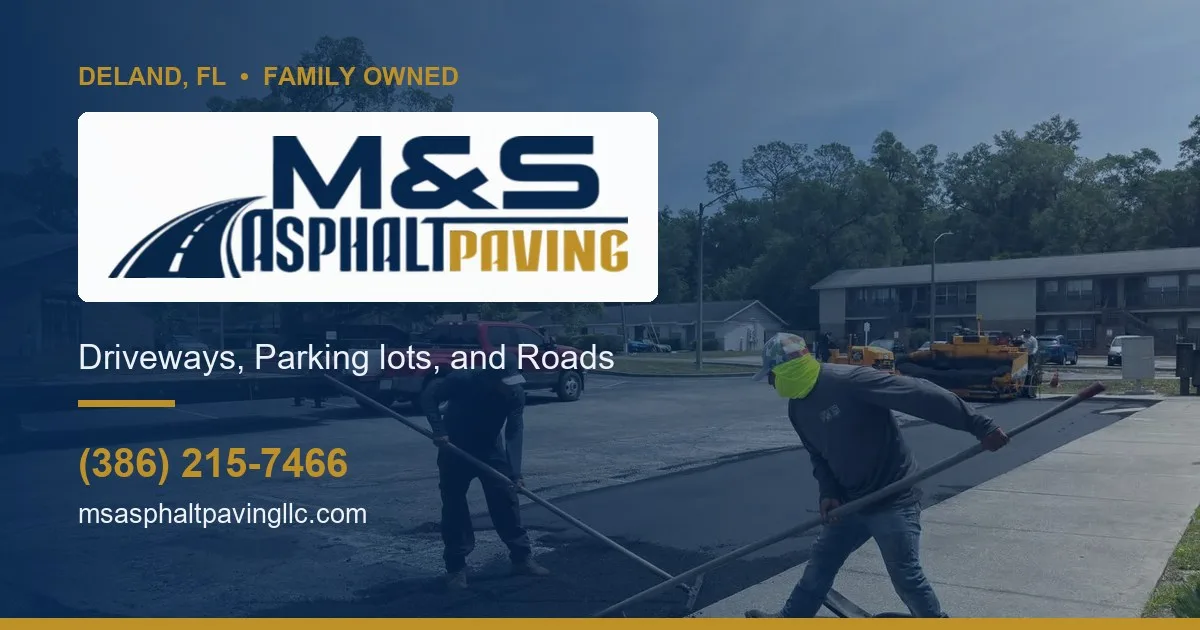
Compare what goes under the asphalt before you compare the price. Two quotes for the same DeLand driveway can sit thousands of dollars apart because one of them pays for a compacted rock base and two full inches of asphalt while the other quietly skips both. That difference lives in the line items, and it is invisible again the moment the job is finished.
Our new website went live this month and we built it around that problem. Every service page walks through what actually happens on a job, in the order it happens, so you can hold a quote up against it. If you have an estimate on the counter right now and the price is bothering you, reach out to our team or call (386) 215-7466. We will read it with you and say whether the number matches the work it describes.
Why is one driveway quote thousands cheaper than another?
Nine times out of ten it comes down to the base. Asphalt is the part you see, but the crushed concrete or lime rock underneath carries the weight of a truck, and it has to be hauled in, spread, and compacted before anything hot arrives. Skipping it saves a day of labor and several loads of rock. That is how a bid gets low enough to win, and why the driveway starts alligatoring in its third summer.
Volusia County sand is why this matters more here than it would further north. Water finds a path through sand after every afternoon storm, and a two inch shell laid straight onto graded sand has nothing underneath holding it up. In the older neighborhoods off Woodland Boulevard you can pick the failures out from the street, because they sink in the wheel paths before they crack anywhere else.
At M&S Asphalt Paving we price the base as its own line. It is the largest single cost on most residential jobs and the easiest one to quietly shave. Find that line on both estimates. A quote without it is not describing the same job.
What has to happen before any asphalt goes down?
Grading, then base, in that order. The ground gets shaped so water leaves the finished surface instead of standing on it, and most of the drainage problems we get called out to look at were decided right there, months or years before a crack ever showed up. On the flatter lots around Stetson University there is not much natural fall to work with, so the grading gets fussy, and that is where an experienced crew earns the gap in price.
The base itself goes down in lifts with a roller over each one, because a single thick dump of rock will not compact all the way through. It is slow, unglamorous work. It is also most of the reason a driveway is still flat in year twelve. When a property needs clearing or serious dirt work first, that stage is its own job with its own price, and we cover it under sitework and site preparation.
How thick should a residential driveway be in Florida?
Two full inches, compacted, for a standard home driveway. More than that if a work truck, an RV, or a loaded trailer is going to live on it. The number that counts is the depth after compaction, because asphalt loses close to a quarter of its height under the roller. A crew that spreads two loose inches and calls it finished has left you with about an inch and a half.
Commercial surfaces work differently. Anything carrying delivery trucks, or the sort of traffic you see around the DeLand Municipal Airport, gets built heavier, and the spec comes off the axle load rather than square footage. Ask about thickness directly either way, because it turns invisible the day the job is finished. An inch and a half looks exactly like two inches for the first couple of years, and then it does not. Our driveway paving page sets out what we build.
What should you ask before you sign anything?
Five questions, and the way a contractor handles them tells you most of what you need to know. Ask what the base is made of and how deep it goes. Ask how many inches of asphalt you get after compaction. Ask whether hauling out the old surface is included. Ask what the warranty covers and, more usefully, what it excludes. Ask who will physically be on your property, since plenty of quotes come from an outfit that then sells the job on.
That fourth one is worth pressing. Our warranty runs a year on material, so if the asphalt fails in a way asphalt should not fail, we come back. A tree root lifting one corner is a different conversation. Three years of coverage that only covers manufacturing defects is a thinner promise than one year backed by somebody local who answers his own phone.
If your surface is only partly gone, ask about crack filling and asphalt repairs before you accept a full replacement. Sometimes that is the honest answer. Once a new surface is down, what keeps it alive is timing. Sealed on a sensible cycle it stays flexible instead of drying out and going brittle. Our driveway sealcoating page has the schedule, and the first coat usually falls six to twelve months after paving.
Juan and Maria run this company themselves, so calling gets you one of them. Look around the new site, hold it up against whatever quote you are holding, and if you want a second opinion or a fresh estimate, get in touch here or call (386) 215-7466. Estimates are free, they usually go out the same day or the next, and nothing is owed at the end of them.