What Does Sitework Add to a Paving Quote, and Why Is It a Separate Line?
by Hanna Carolina · 4 min read
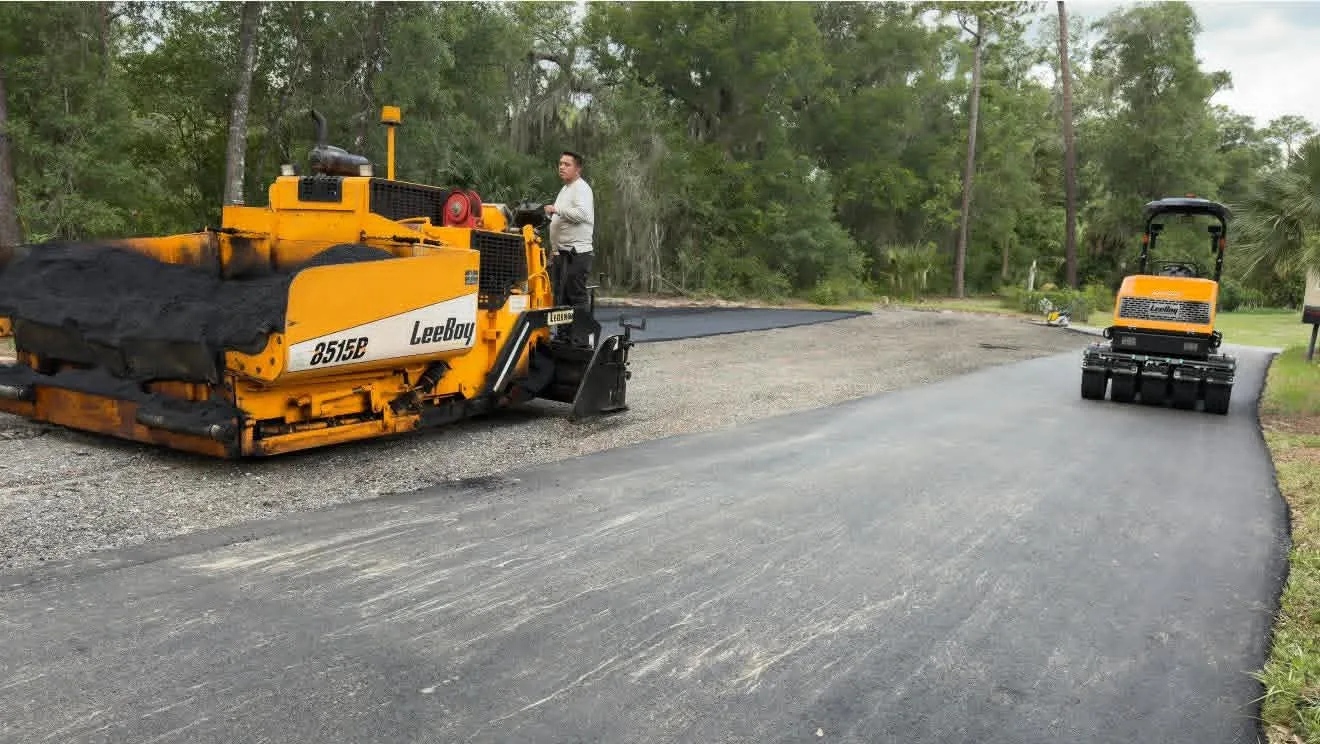
Sitework is everything that happens before any asphalt arrives: clearing, grading, drainage and building the compacted base. On a raw lot it is frequently the larger half of the job, and it is quoted separately because it is separate work with separate equipment. It also decides how long the finished surface lasts.
Which is why a quote that folds it into one lump sum is difficult to compare against anything. If you have bids in front of you and cannot tell what ground work each includes, reach out to our team or call (386) 215-7466 and we will help you read them.
What actually counts as sitework?
Everything between raw ground and a surface ready to pave. Land clearing takes off vegetation, stumps and whatever else is in the way. Grading shapes the ground to the elevations the finished surface needs, including the fall that moves water off it. Then the road base goes in, crushed concrete or lime rock, placed in lifts and compacted between each one until it will carry a load.
On an existing property it can also mean removing what is already there. An old surface has to come out and get hauled away, and if the base under it failed, that material comes out too. Recycled milling is worth asking about here, because milled material from another job can sometimes be reused as base rather than paying for new rock and disposal both.
Our page on sitework and site preparation sets out what we handle. On a commercial site this stage often takes longer than laying the asphalt does, which surprises people who assumed paving was the whole job.
Why is grading the part that decides everything?
Because water is what destroys asphalt, and grading is what decides where water goes. A surface has to shed rain toward somewhere it can leave. Get that wrong and water stands on the asphalt after every storm, works down through it, reaches the base and softens the rock that is holding everything up. In Central Florida that test runs most afternoons through the summer.
Almost every drainage problem we get called out to look at was settled at the grading stage, months or years before a crack appeared. Nobody sees it happen. The lot looks finished and correct, and the consequence arrives long after the crew has gone. Flat sites are the hard ones, because there is less natural fall to work with and the tolerances get tight.
Experience shows up here, and it is hard to audit. A crew that has graded a few hundred sites reads a lot differently from one that has graded a dozen.
What happens when sitework gets shortcut?
The asphalt fails early and the reason is buried under it. Laying a surface on dirt or on inadequately compacted rock produces something that looks correct on handover day and starts breaking up within a few years, because the layer that should carry the weight cannot. By then the cost of doing the ground work properly has to be paid anyway, on top of a surface that has already been bought once.
You can usually see it in how the failure shows up. Cracking that appears in wheel paths, sections that have settled lower than the ground around them, and puddles that outlast the storm are all base and grade problems rather than surface ones. Those get repaired by digging back down, which is exactly the work that got skipped. Our page on crack filling and asphalt repairs covers what that involves.
Ten to fifteen years is what a properly prepared surface gives you here. Three to five is what a shortcut gives you, and nobody writes that on a quote.
How do you compare bids when only one of them prices it?
Make every bidder itemize the ground work, then compare those lines rather than the totals. Ask what depth of base goes in and what material it is. Ask whether it is compacted in lifts. Ask who is responsible for drainage and what happens if water stands after the job. A bidder who cannot answer those in plain language has not priced the work properly.
At M&S Asphalt Paving the base and the site preparation get their own lines. That is exactly why. Juan has twenty two years in asphalt, including DOT road work, where base depth and compaction get inspected rather than taken on trust, and he carried those habits into every job we quote.
If you are pricing a raw lot, a rebuild, or a project where the ground work is the unknown, get in touch here or call (386) 215-7466. We will walk the site and put numbers against each stage. Estimates are free, usually same day or next, and we speak English and Spanish.