Repaving a Cul-de-Sac in Maitland: How a Paving Company Handles Tight Turnarounds and Driveway Access
by Maria Santana · 4 min read
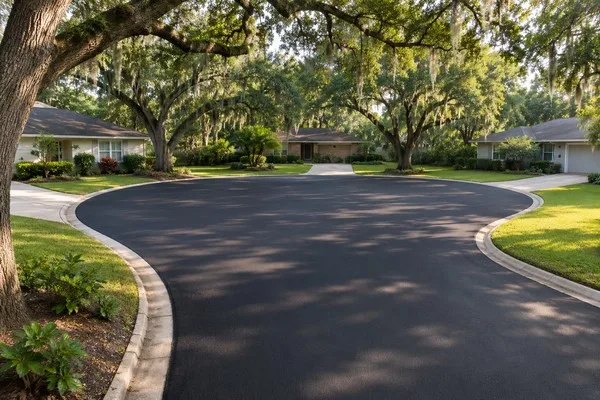
When paving a cul-de-sac, it is essential to have clear communication with residents and a staging plan so people can still get in and out. A paving company that plans around every driveway and every low spot can turn a cracked, patched turnaround into a smooth street that drains properly.
M&S Asphalt Paving is a family-run paving company based in the DeLand area that serves communities including Maitland. To request a site visit and estimate, reach out to our team or call (386) 215-7466.
Why Does a Cul-de-Sac Bulb Wear Differently From a Straight Road?
The bulb of a cul-de-sac takes constant turning traffic, and water tends to collect at its low spots. Both wear the pavement faster than a straight stretch of road.
Every garbage truck, moving van, and delivery vehicle turns around in the same circle. Those tight turns twist and scuff the asphalt, especially along the outer edge. Over time, that stress shows up as cracks, raveling, and patched areas that never quite hold.
Water adds to the damage. If the bulb was not graded well originally, or the base has settled, rain collects in low spots along the curb. Standing water softens the base and speeds up cracking and potholes.
Shady streets near Lake Maitland with mature trees can add another factor, since roots and leaf debris affect both the base and drainage. Our residential asphalt paving work starts by looking at how the bulb is actually being used and where water is going.
How Does a Paving Company Keep Every Driveway Accessible?
It starts with a staging plan and clear notice to residents. Neighbors should know which areas will be worked on, when to move cars, and when they can drive on the new surface again.
On a short private street, there may be no other way in or out. A good plan explains whether work will happen in sections, where residents should park during the job, and how long to stay off the fresh asphalt while it cools.
Driveway aprons deserve special care. On our Maitland cul-de-sac project, each driveway apron tied into the same mat, and the crew checked that the aprons sat flush so nobody bumped over a lip on the way in. Residents got their driveways back once the mat had cooled.
Communication keeps things calm. Whether the street is near Lake Lily or tucked behind a busier road, a simple notice to every household before work begins helps prevent blocked cars and frustrated neighbors.
How Is Grading Planned So Water Flows Where It Should?
Grading is set before any asphalt goes down. The base is shaped so rain runs toward the gutter line and drains instead of pooling in the bulb or at the curb.
On the Maitland project, the crew spread and compacted crushed stone, then shoveled extra stone into low spots and rechecked the grade before ordering mix. Fixing a low spot in stone is far easier than fixing it after the asphalt is down.
The edge along the curb gets as much attention as the middle. A roller cannot always reach the gutter line, so a plate compactor is used to pack the base tight against the curb. That helps keep water from getting under the new surface.
Proper base and grading work is part of our sitework and site preparation services. Streets off Maitland Boulevard and other busy corridors benefit when that groundwork is done right the first time.
What Should Neighbors Agree On Before Signing?
Neighbors should agree on the scope of work, how costs will be shared, the schedule, and who will be the main contact with the contractor. Settling these details first avoids disputes once work begins.
Decide whether the project includes only the bulb or the full street, and whether driveway aprons are part of the job. Agree on how the cost will be divided and who approves changes if something unexpected comes up.
Pick one person or a small committee to communicate with the contractor and share updates. That keeps information consistent and makes it easier to plan around move-in days, deliveries, and other events. It also helps to agree on how residents will be notified, whether by email, a group text, or flyers on each door.
Ready to fix a cracked or patched cul-de-sac? Call (386) 215-7466 or contact M&S Asphalt Paving to request a site visit and estimate.