Asphalt Milling and PavingDaytona Beach, Florida
An old two lane road milled down and repaved while flaggers held traffic in stages. The barrel line, the milling machine and the finished intersection are all below.
Project at a glance
- Location
- Daytona Beach, Volusia County
- Scope
- Mill and repave
- Setting
- Two lane road and intersection
- Access
- Traffic held by flaggers
The Setup
Why does repaving a road start with a line of barrels?
Because the road stays in use while the crew works on it. Before any machine touches the old asphalt, the traffic plan has to be standing and staffed.
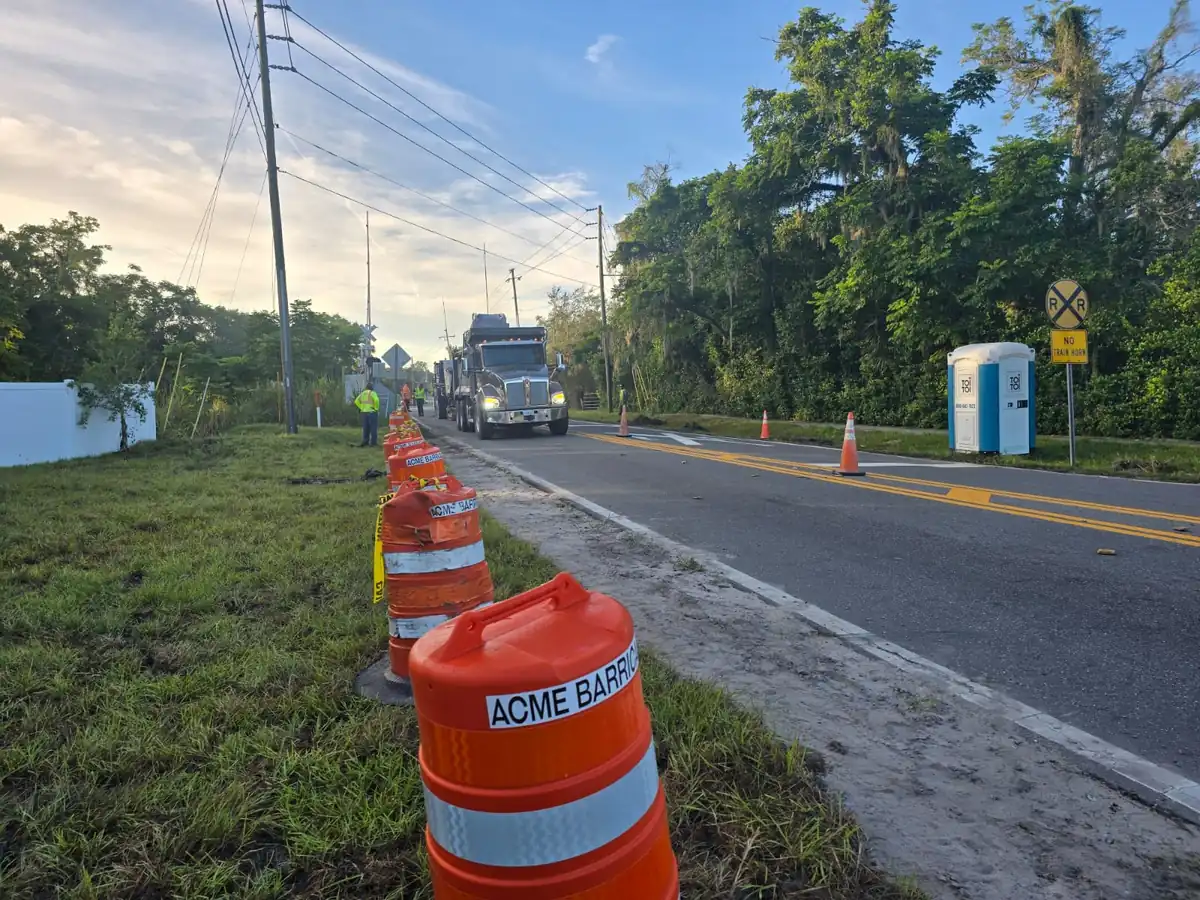
This photo is that plan first thing in the morning. Orange drums run along the shoulder, cones mark the lane, and a flagger in a vest stands at the head of the work zone holding cars while a loaded truck rolls through. Look to the right. That is a railroad crossing sign with a No Train Horn plate under it. A crossing near the work changes the whole plan, because nobody can be left stacked up on the tracks waiting for a flagger to wave them on. So the hold points get placed with the rails in mind, and the queue stays short.
Even the portable toilet is part of the setup. A milling and paving day on a public road runs long, and a crew member who has to leave the site is one less set of eyes on traffic. Planning that far ahead is ordinary for M&S Asphalt Paving. Drivers never notice it when it is done right.
The Mill
What does a milling machine actually do to the road?
It grinds the old asphalt off to a set depth and throws it straight into a truck. The lane comes out lower and rough textured, ready for a new surface.
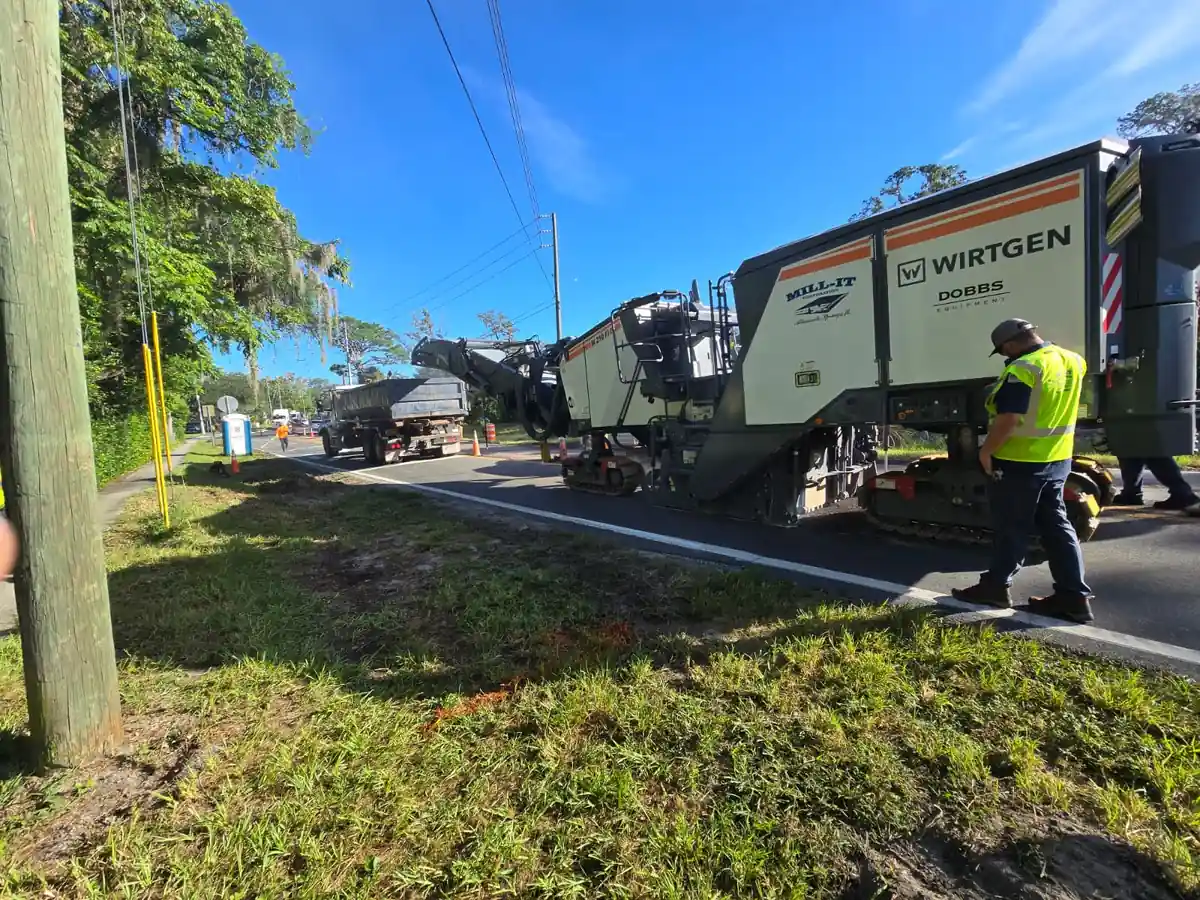
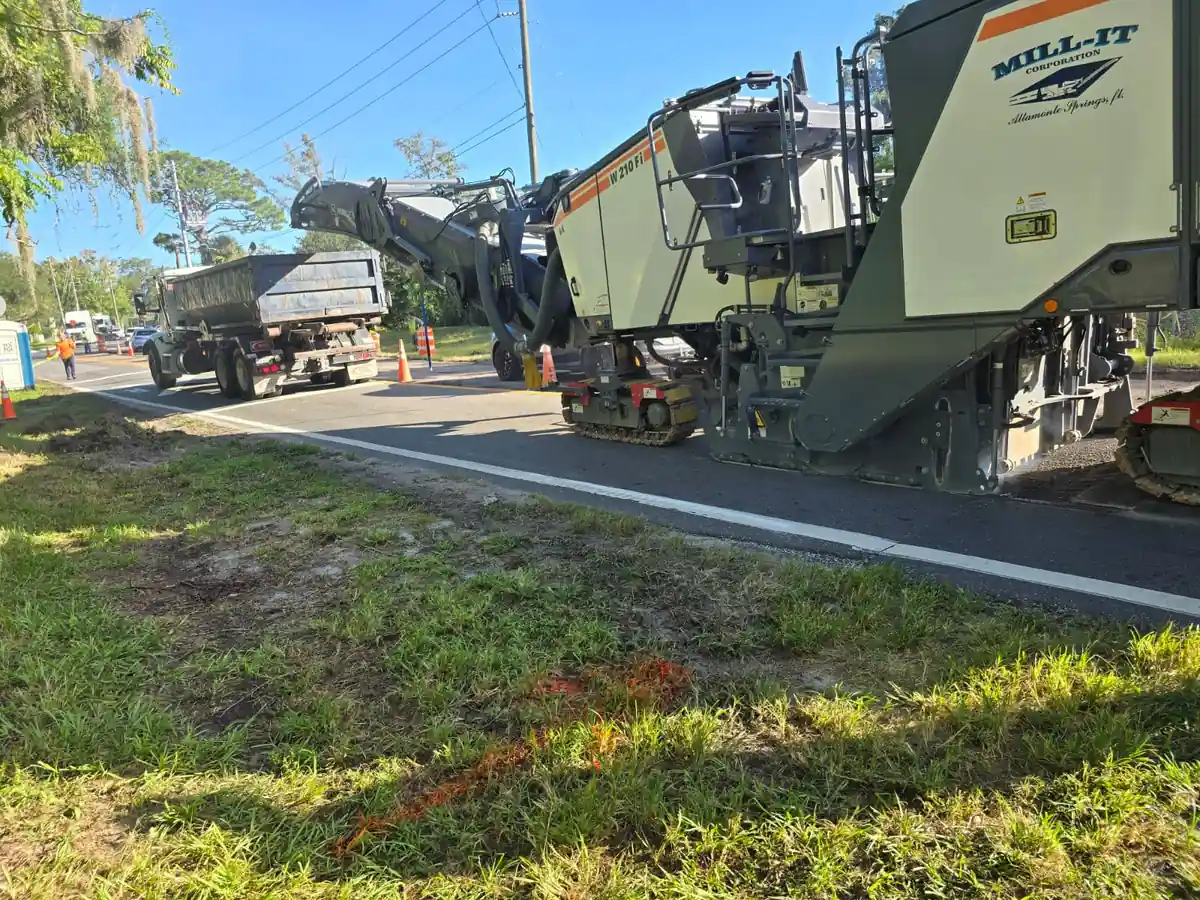
The machine on this job was a Wirtgen W 210 Fi cold planer. Underneath it is a drum covered in carbide teeth that spins against the pavement and chews the top layer loose. A conveyor on the front carries the millings up and over into a dump truck driving just ahead, so the truck and the mill move down the lane together at a walking pace. When one truck fills, the next pulls in. If that swap is slow, the mill stops. Everything behind it stops too.
The man walking beside the machine is watching the cut, not the scenery. Depth is set on the mill, but the edge along the white line still needs eyes on it the whole way. The orange marks in the grass are the kind a utility locate leaves, and they are a reminder that nobody works the edge of a road without knowing what is buried there. That same discipline carries over to our commercial asphalt jobs, where the lot stays open and the trucks have to keep moving.
Barrels To Crosswalk
What did the road look like from start to finish?
Four frames in the order they happened: the work zone set up on the old road, the mill working the lane from two angles, and the intersection after paving and striping. The finished frame is the one that matters to anyone who lives on it.
The Reason
Why mill the old asphalt instead of paving right over it?
Because paving over the top raises the road, and a road has fixed heights it has to meet. Milling takes the old surface down so the new one finishes where the curb, the gutter and the crossings expect it.
Every overlay adds thickness. Lay a new mat on an old one and the lane climbs against everything around it. Driveway aprons end up with a lip. The edge drops off to the shoulder. Water that used to run to the gutter starts sitting in the lane instead. Near a rail crossing the stakes go up, since the road has to meet the crossing surface and that height is not ours to change.
Milling also removes the layer that has already failed. The top of an old road is where the oxidation and the cracking live, and paving over cracks tends to bring them right back up through the new surface. Cut that layer off and the new asphalt bonds to sound material. We took the same approach on a mill and overlay on a DeLand street, and it sits behind most of the asphalt paving we do on roads that are worn out on top but still solid underneath.
The Finish
How soon can traffic drive on a road after it is milled and paved?
Once the new asphalt has cooled enough to take a load without marking. On a typical two inch lift that is a matter of hours, not days.
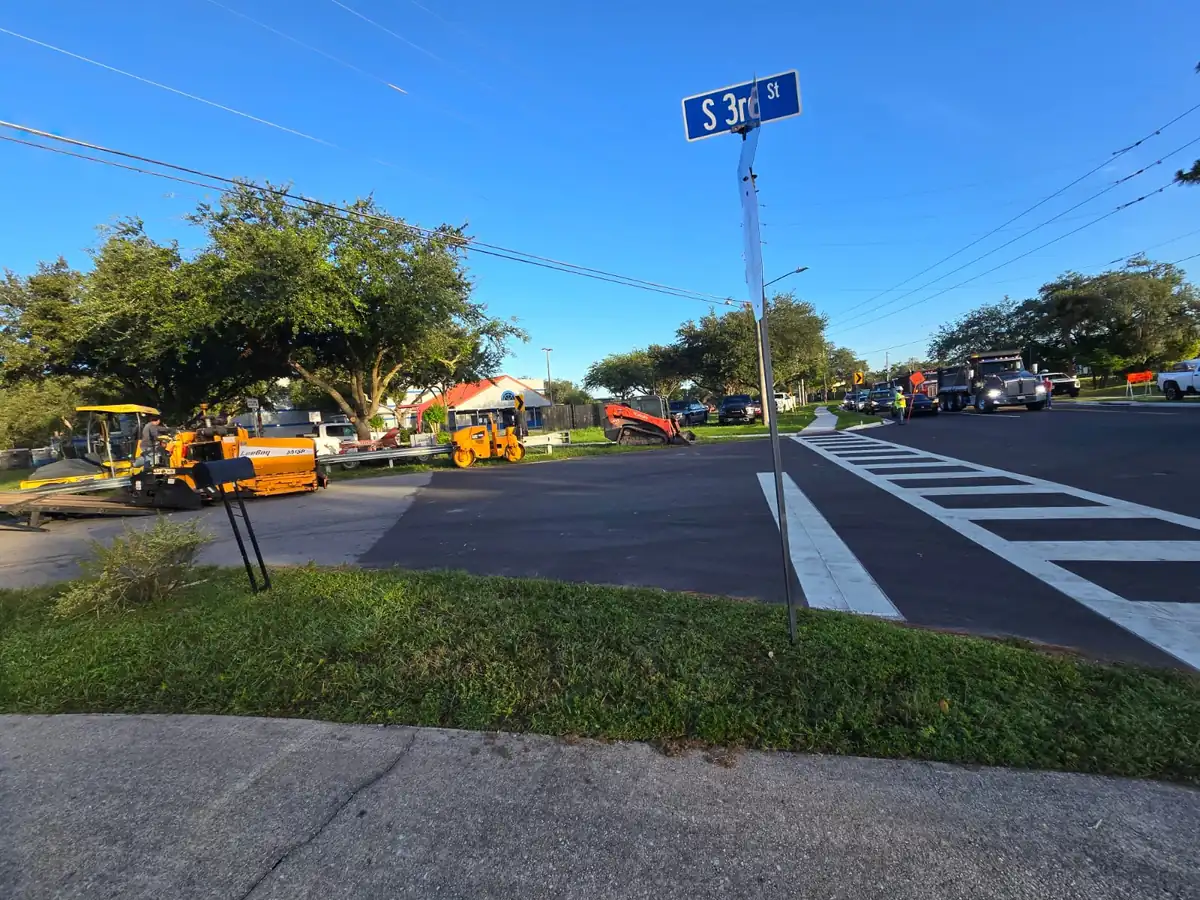
Here is the intersection after the work. Black asphalt all the way across, and the crosswalk bars striped back in bright white. Over on the left the paver is already loaded on its trailer, with the roller parked beside it and a compact track loader behind. That is a crew packing up. The trucks at the far end are headed out, and the road is about to be handed back to the people who use it every day.
Striping is the step people forget to ask about. A milled road loses every marking it had, and a crosswalk that is missing when the road reopens is a real hazard for anyone on foot. The lines go back once the surface is ready for them, and the barrels come in last. If a road, private drive or community street near you is due for this kind of work, our asphalt paving in Daytona Beach page explains how we look at it and price it.
Want to see a residential street done the same way?
The DeLand road repaving job is a mill and overlay on a tree lined street, paved half a lane at a time so the neighbors could still get in and out.
Need a road or private drive milled and repaved?
Call and tell us what you are dealing with. A road breaking up at the edges, a community street that has been patched too many times, a private drive that holds water. We come out, look at it, and give you a straight price.
Call us today (386) 215-7466