Cul-de-Sac RepavingDeLand, Florida
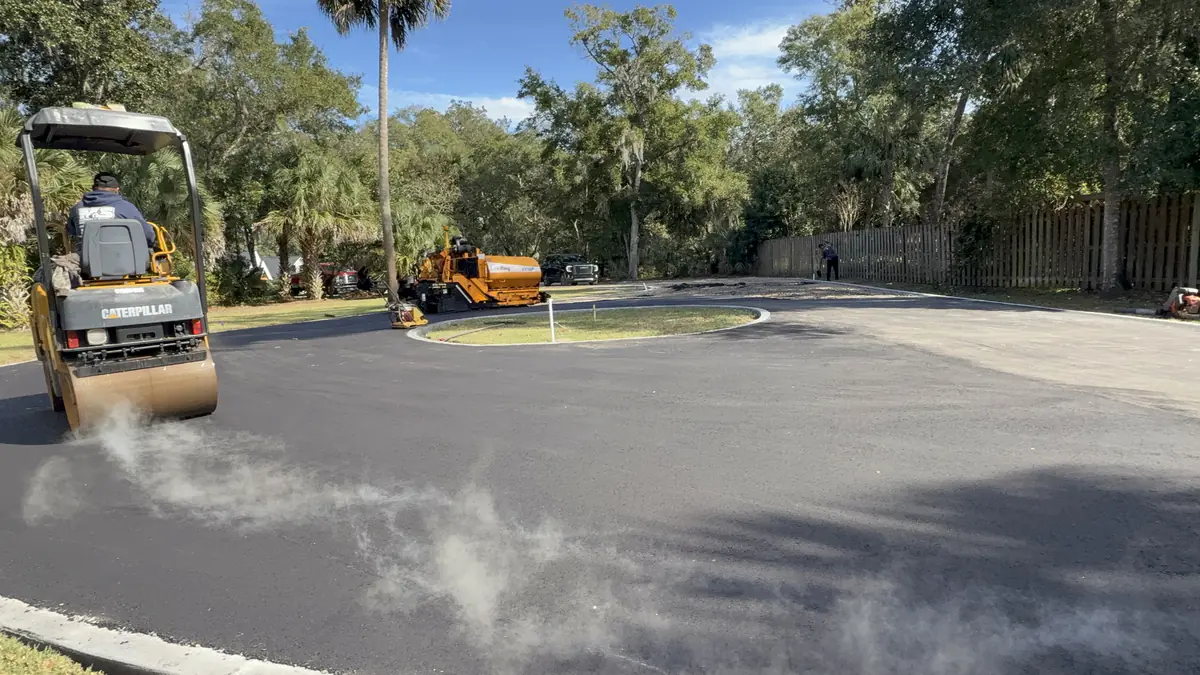
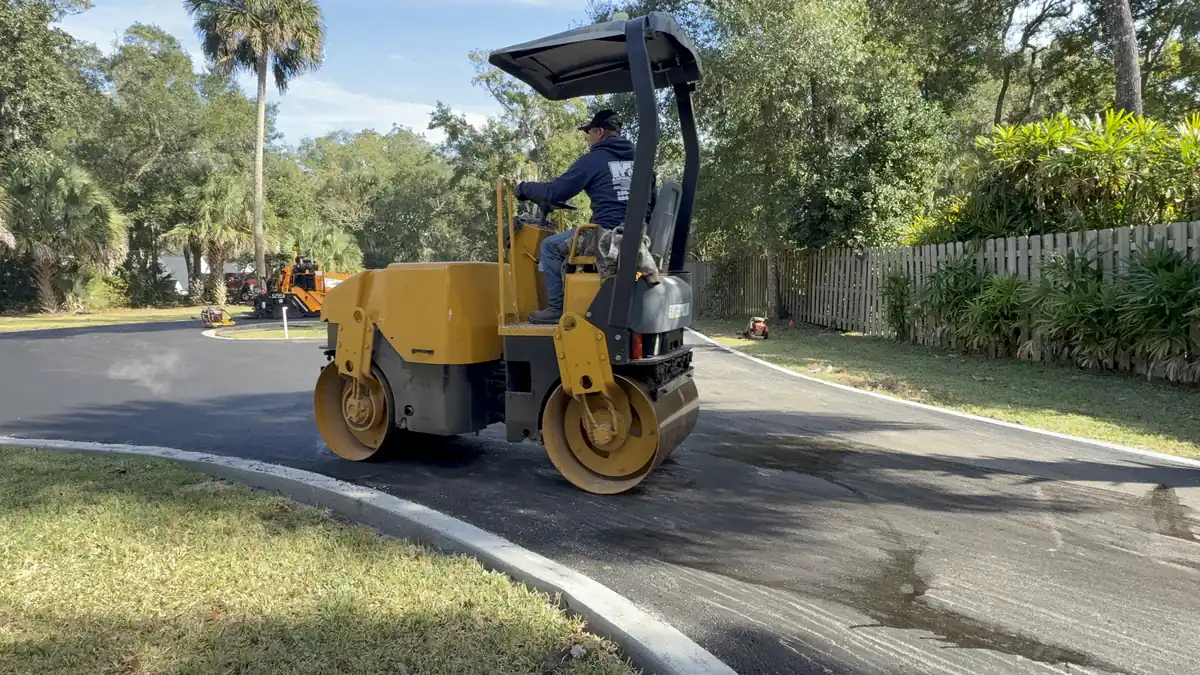
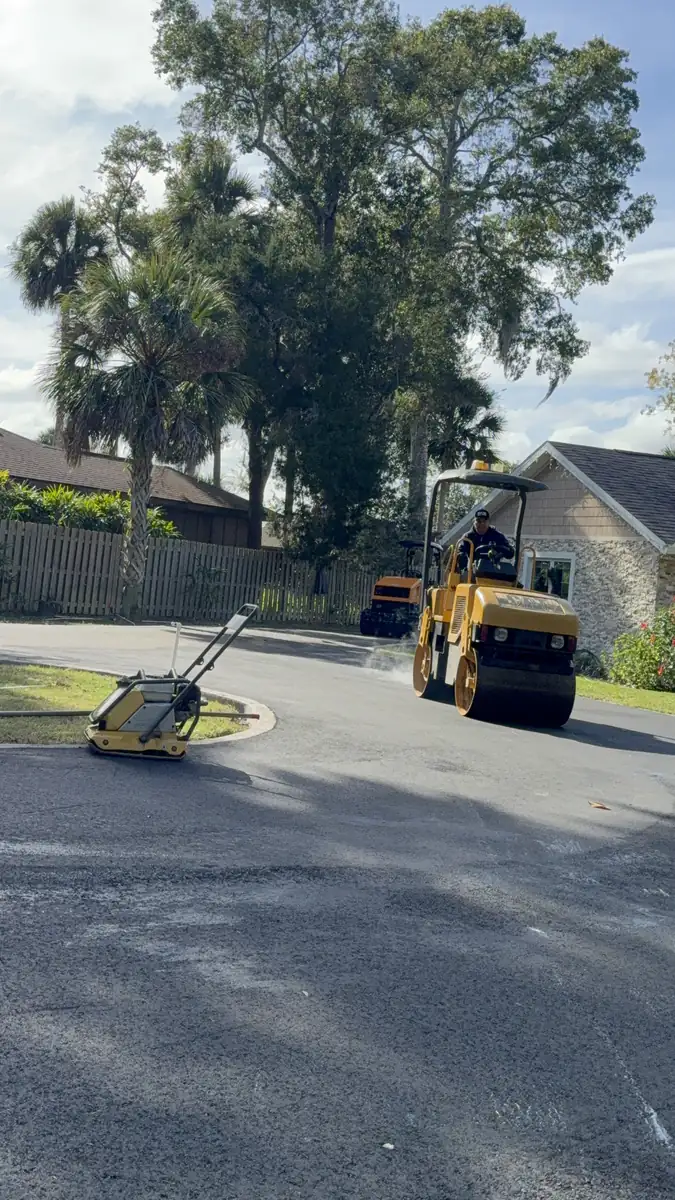
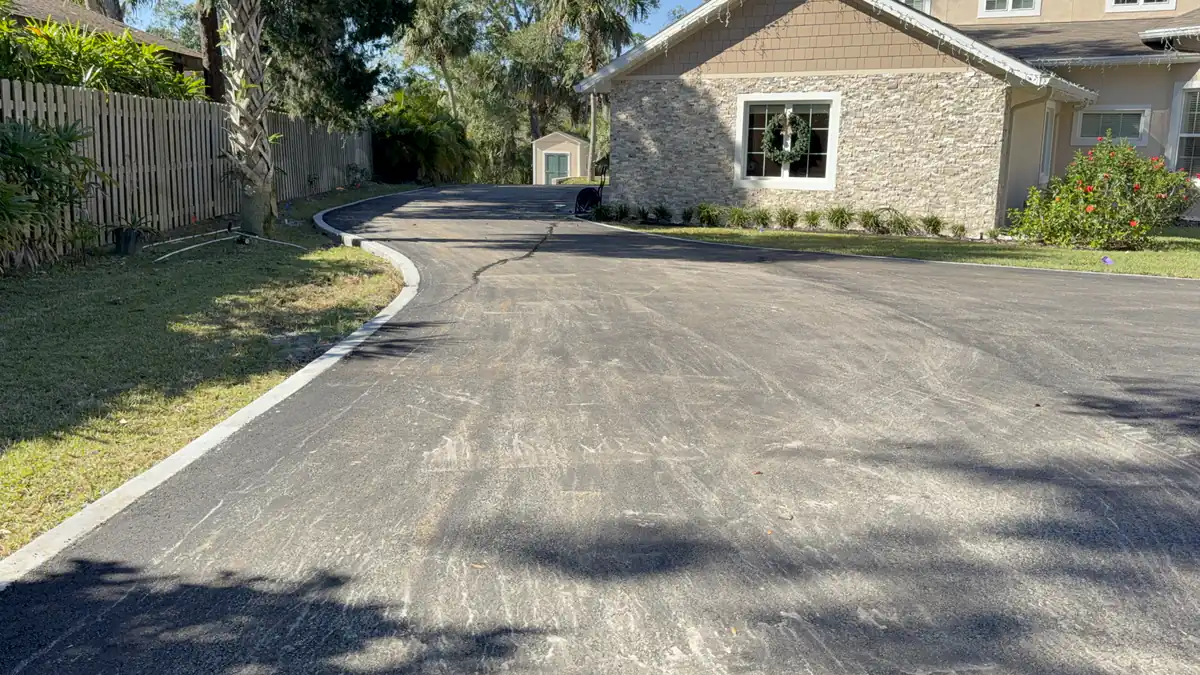
A residential cul-de-sac resurfaced end to end, from the paver running the curve around the island to the roller sealing the mat tight against the concrete curb. Photos and video from the day are below.
Project at a glance
- Location
- DeLand, Volusia County
- Scope
- Full cul-de-sac resurface
- Equipment
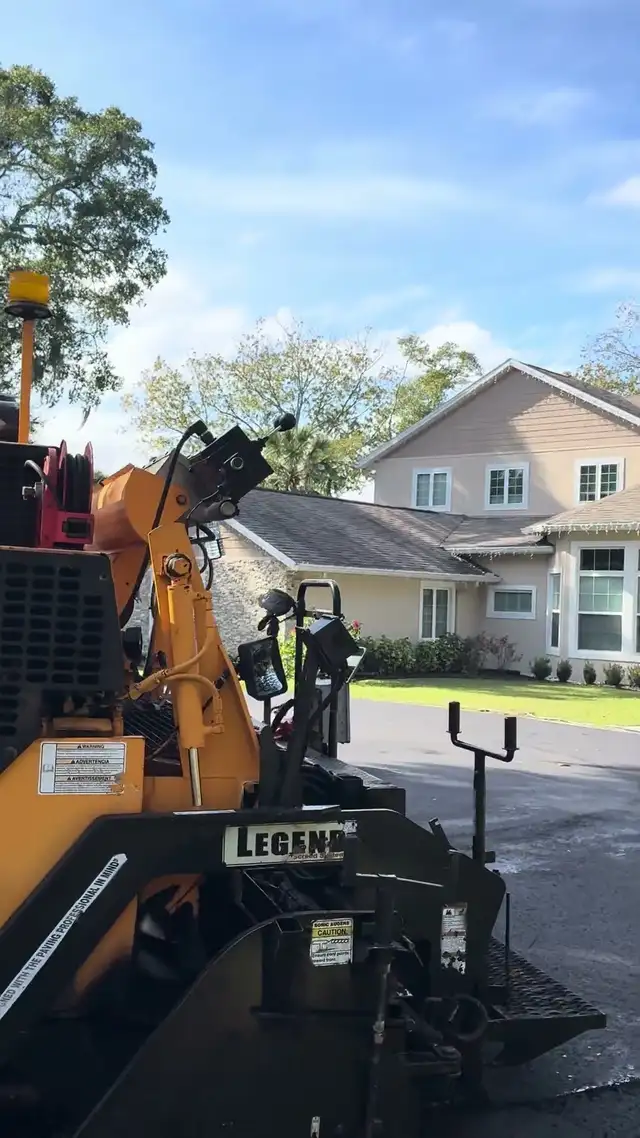
- LeeBoy paver, CAT roller
- Edges
- Curb, island and aprons
The Challenge
What makes a cul-de-sac harder to pave than a straight stretch of road?
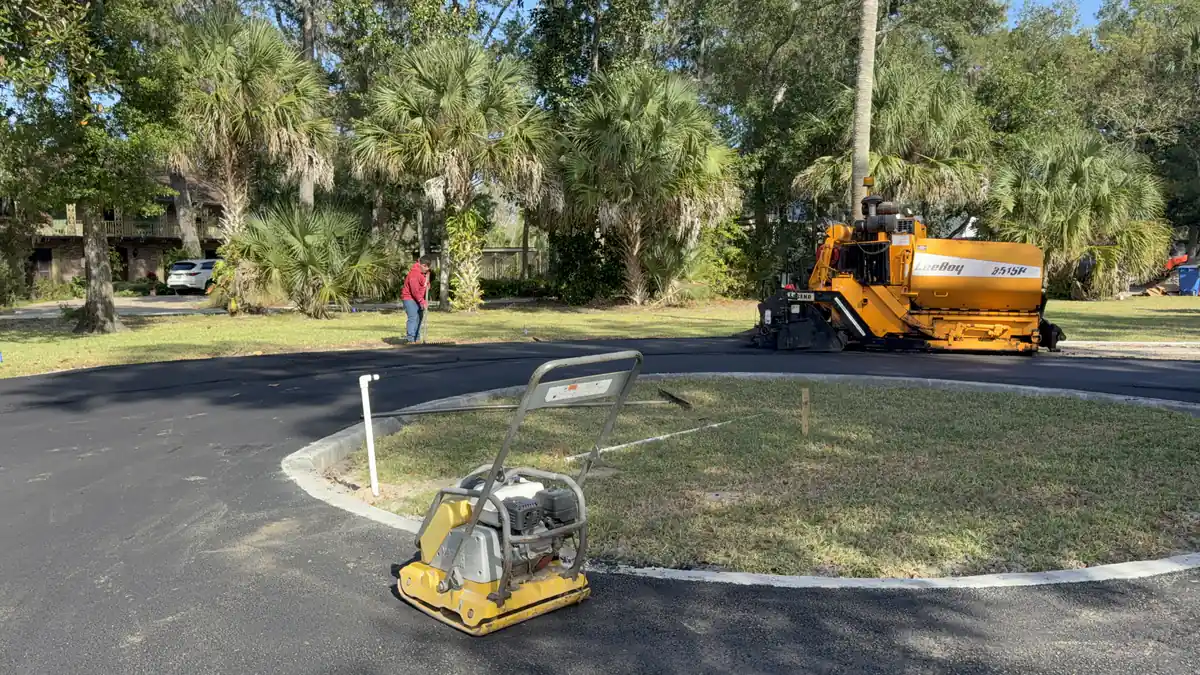
The curve. A paver lays a straight, even mat beautifully, but a cul-de-sac bulb asks it to run a constant arc around a centre island, and the screed does not naturally want to do that.
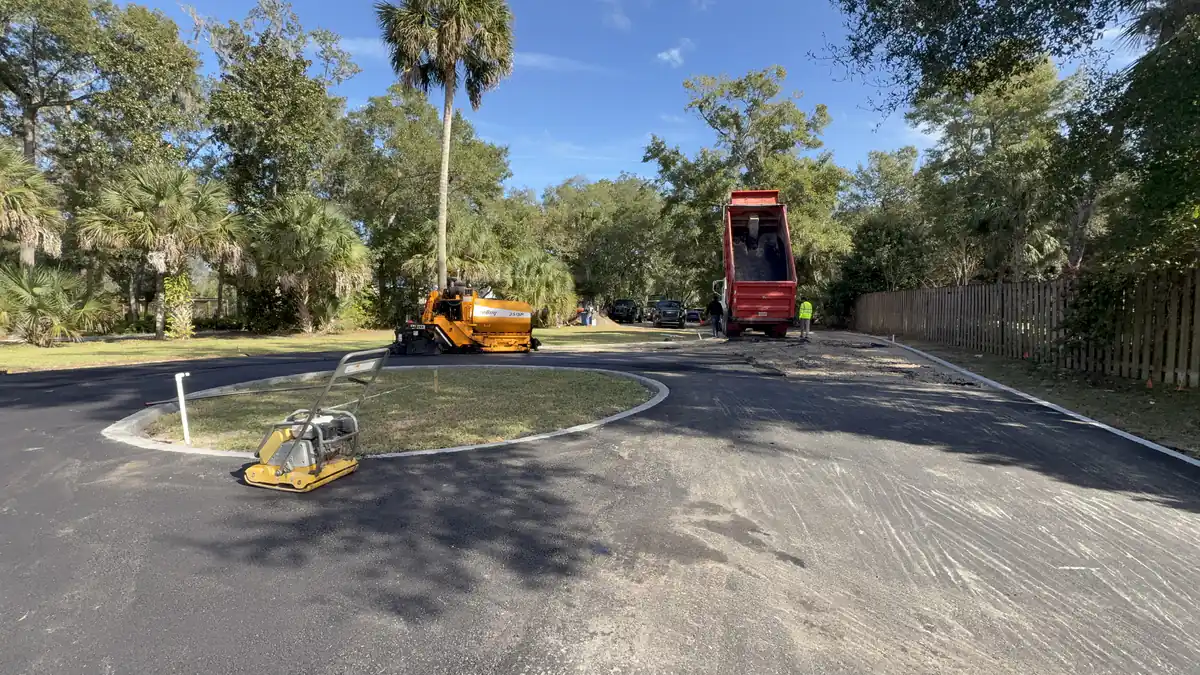
Everything about the shape works against a clean finish. The inside edge of the arc travels a much shorter distance than the outside edge, so the mat wants to bunch on the island side and stretch thin on the outside. There is no long straight run to build a rhythm on. The paver operator ends up making constant small corrections, and every one of them is a place where the surface can end up slightly proud or slightly hungry if nobody is paying attention. Then there are the edges. A bulb like this one is ringed by concrete: a ribbon curb around the island, a gutter pan on the outside, and driveway aprons opening off it at odd angles.
Those concrete edges are where the walk-behind plate compactor in the photos earns its keep. A ride-on roller cannot get tight into the curb line without climbing it, so the crew works the last few inches by hand. Get that wrong and water sits in a shallow trough along the curb for the next decade. It is the same principle behind good driveway paving, just at a bigger radius, and it is the reason M&S Asphalt Paving puts a person on a plate compactor rather than trusting the roller to reach everything.
On The Job
Why does the roller matter more than most people think?
Because compaction is what turns a pile of hot stone and binder into pavement. Asphalt that is not rolled tight enough while it is still hot will look fine on day one and start coming apart within a couple of seasons.
The steam coming off the mat in the clip below is the giveaway that the crew is working inside the window. Once the mix drops below temperature it stops moving under the drum, and whatever air is left in it stays there permanently. Air voids let water in. Water is what causes the raveling and potholes people notice years later. That is why the roller follows the paver closely instead of waiting for the whole bulb to be laid, and why the crew keeps working even when the light is going. The same discipline applies on a commercial asphalt lot, where the passes are longer but the clock is exactly as unforgiving.
Start To Finish
What does the job look like from start to finish?
For Boards And Homeowners
Who pays for a cul-de-sac like this one, and how long does it last?
It depends on whether the road was ever dedicated to the city or county. Plenty of DeLand cul-de-sacs sit on private drives that were never taken over by a public authority, which puts the surface squarely on the HOA or on the homeowners who share it.
That is worth checking before you get quotes, because it changes who you are collecting from and what approvals you need. Where the road is private, the practical question is usually timing. A surface we lay is built to give ten to fifteen years here, and the way to reach the far end of that range rather than the near one is to keep water out of it. Deal with cracks while they are hairlines. Wait until they have opened up and they start taking the base with them, which is a far bigger bill.
A bulb also takes more punishment than the straight road feeding it, because every vehicle that comes down the street turns on it. Delivery vans, garbage trucks and anybody who overshoots a driveway all pivot on the same few square yards, and turning loads shove the surface sideways in a way that straight-line traffic does not. If your bulb is showing scuffing or shoving but the road behind it is sound, that is a repair conversation rather than a repaving one. We cover the options on our asphalt paving in DeLand page, and regular asphalt sealcoating is usually the cheapest way to protect a surface that is still structurally fine.
Want to see another job?
The residential road project shows the milling side of the work, where the old surface comes off first and the street stays open half a lane at a time.
Need a price for your street, bulb or shared drive?
Call and tell us what you are dealing with. We come out, look at the surface and the drainage, and give you a straight price with the scope written out. Boards are welcome to send us the whole road at once.
Call us today (386) 215-7466