Parking Lot Curb and ConcreteDeLand, Florida
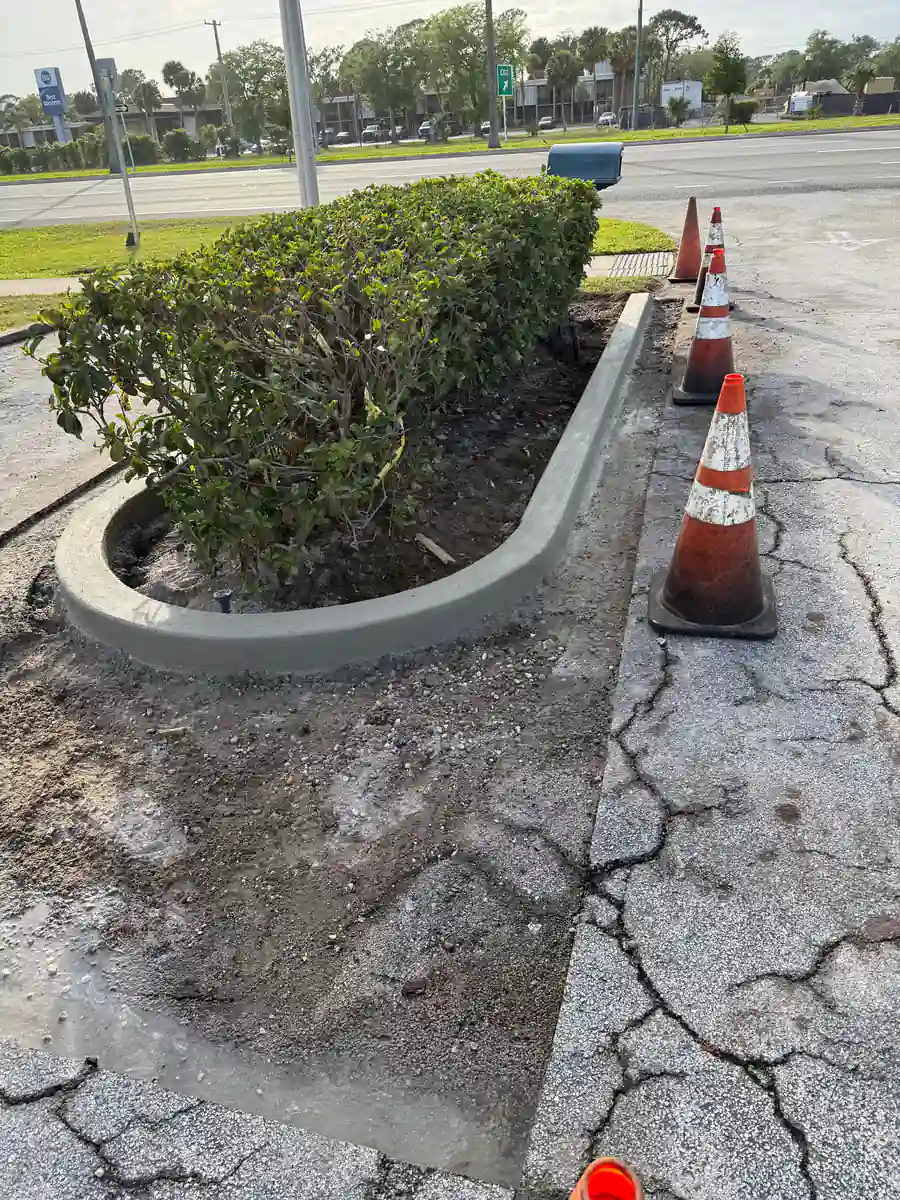
New concrete curb formed and poured around the landscape islands of a retail lot on a DeLand highway frontage, with the property trading the whole time. Forms, radius work and the finished edge are below.
Project at a glance
- Location
- DeLand, Volusia County
- Scope
- Concrete curb and island work
- Setting
- Highway frontage retail lot
- Access
- Lot open, worked in sections
The Reason
Why does a parking lot need good concrete curb before it needs new asphalt?
Because the curb is what holds the edge of the asphalt together. An unsupported asphalt edge crumbles, and it crumbles from the outside in.
Asphalt has very little strength at a free edge. Every tire that clips it takes a piece, water gets into the break, and within a few seasons the edge has raveled back far enough to expose the base. Curb stops that by giving the mat something to lean on. It also steers water, because a curb line is a channel whether anyone designed it as one or not. Get it right and the inlets do their work. Get it wrong and you have built a dam.
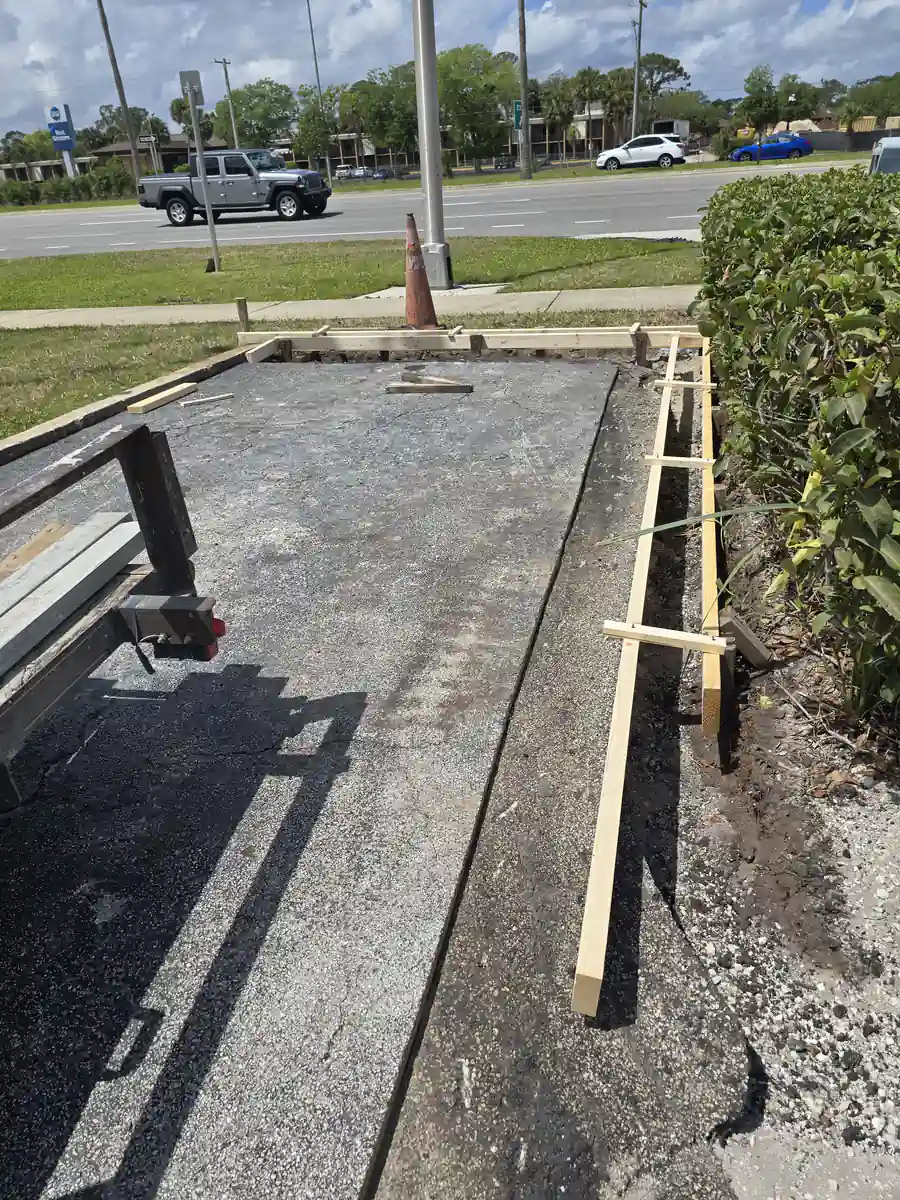
This photo shows what that costs in labor. A trench cut back into the old asphalt along the whole island edge, timber forms and stakes set to a line, base rock underneath, and a cone on the traffic side because the highway runs a few feet away. Working a live retail lot in DeLand means taking one section at a time and giving it back. That is how M&S Asphalt Paving works any occupied property, and the wider scope is on our sitework and site preparation page.
The Craft
What goes into forming a curb that holds its line?
Stakes, and more of them than you think. Wet concrete pushes hard, and a form that moves during the pour gives you a wavy curb that everybody notices forever.
Cut the trench back into the existing asphalt so the curb keys into something solid. Compact the base in the trench. Set the inside form to a string line for the top of the curb, because that line is the finished height and there is no adjusting it later. Then stake it off at close centers, brace the back, and check the line again before the truck shows up. On a straight run this goes quickly. On the radius around a planter it does not, because the form has to be kerfed or bent in short segments to hold a smooth arc.
The pour itself is the short part. The finisher works the top and the face while the concrete is still green and tools the edge so it does not chip the first time a tire kisses it. Then it cures and nobody touches it. Concrete loaded too early is concrete you pour twice. This is the same care that goes into the edges on a commercial asphalt lot, where the curb and the paving get planned together rather than bolted on to each other.
Forms To Finish
What did the curb look like going in and coming out?
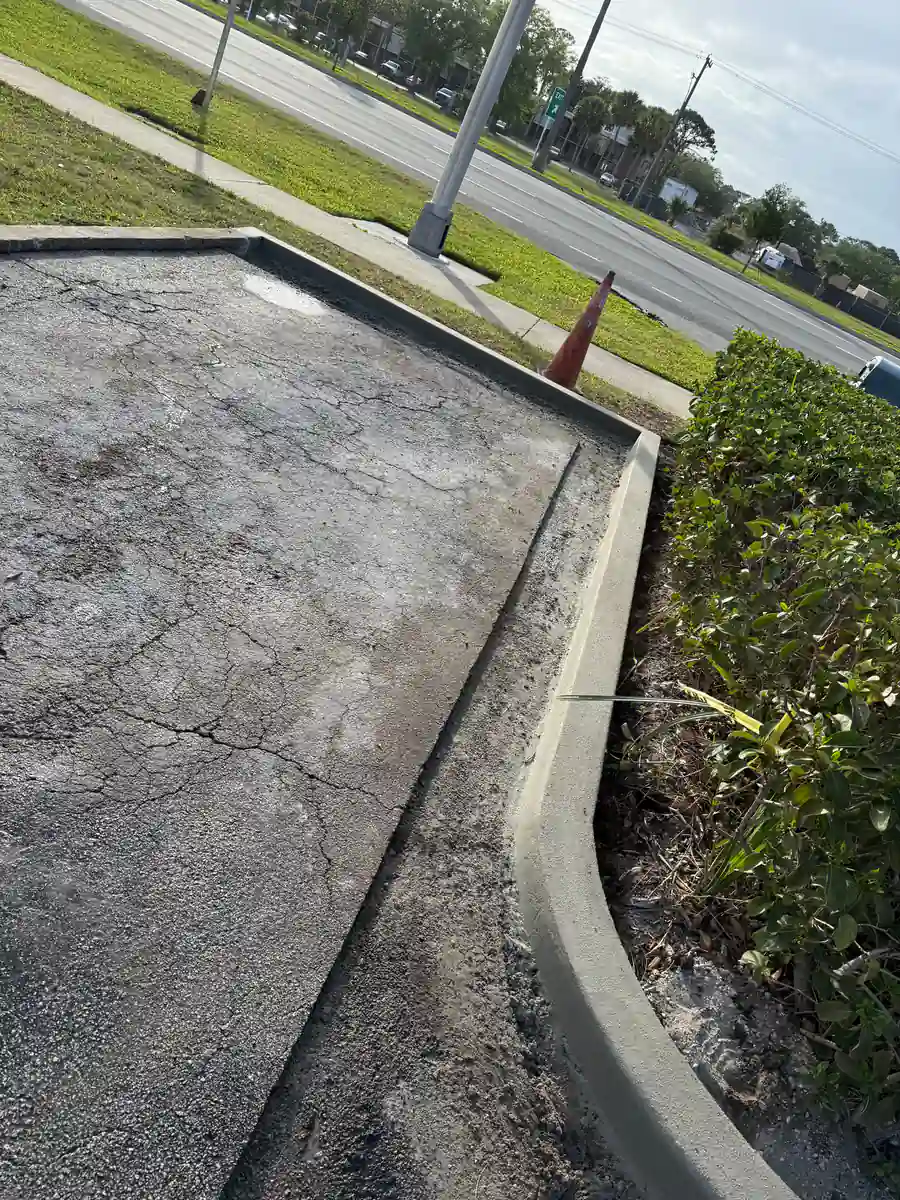
Three frames: the forms and trench, the finished radius around the planter, and the new curb closing off the end of a parking bay. The middle one took the longest by a wide margin.
Next Decision
What happens to the cracked asphalt around new curb work?
It gets tied back in, and then somebody has to make a call about the rest of the lot. New concrete against a failing surface makes the failing surface very easy to see.
This photo shows the pattern. Cracks running in interlocking rectangles across the old asphalt, which is block cracking, and it tells you the binder has aged and gone brittle rather than the base having failed. That distinction changes the price by a lot. A lot with block cracking and a sound structure underneath can often be sealed and kept going for years. A lot where the cracks follow wheel paths in long parallel lines is a different diagnosis, and no amount of sealer fixes it.
So the honest answer here is that the curb was the urgent part and the surface is the planned part. The perimeter where new concrete meets old asphalt gets patched and tied in as part of the concrete work, and after that the owner has a real choice rather than an emergency. Staying on top of the cracks with crack filling and repairs buys genuine time. When the surface is eventually past that, our asphalt paving in DeLand page covers what resurfacing involves. We will tell you which of the two you are looking at.
Want to see another commercial job?
The Orlando parking lot build shows the other half of this work, where a whole lot was cut to grade and paved while the complex stayed open.
Need curb, concrete or island work on your lot?
Call and describe what is failing. Broken curb, an island that has lost its edge, a lot shedding asphalt where nothing holds it. We come out and give you a straight price on the concrete and the asphalt around it.
Call us today (386) 215-7466