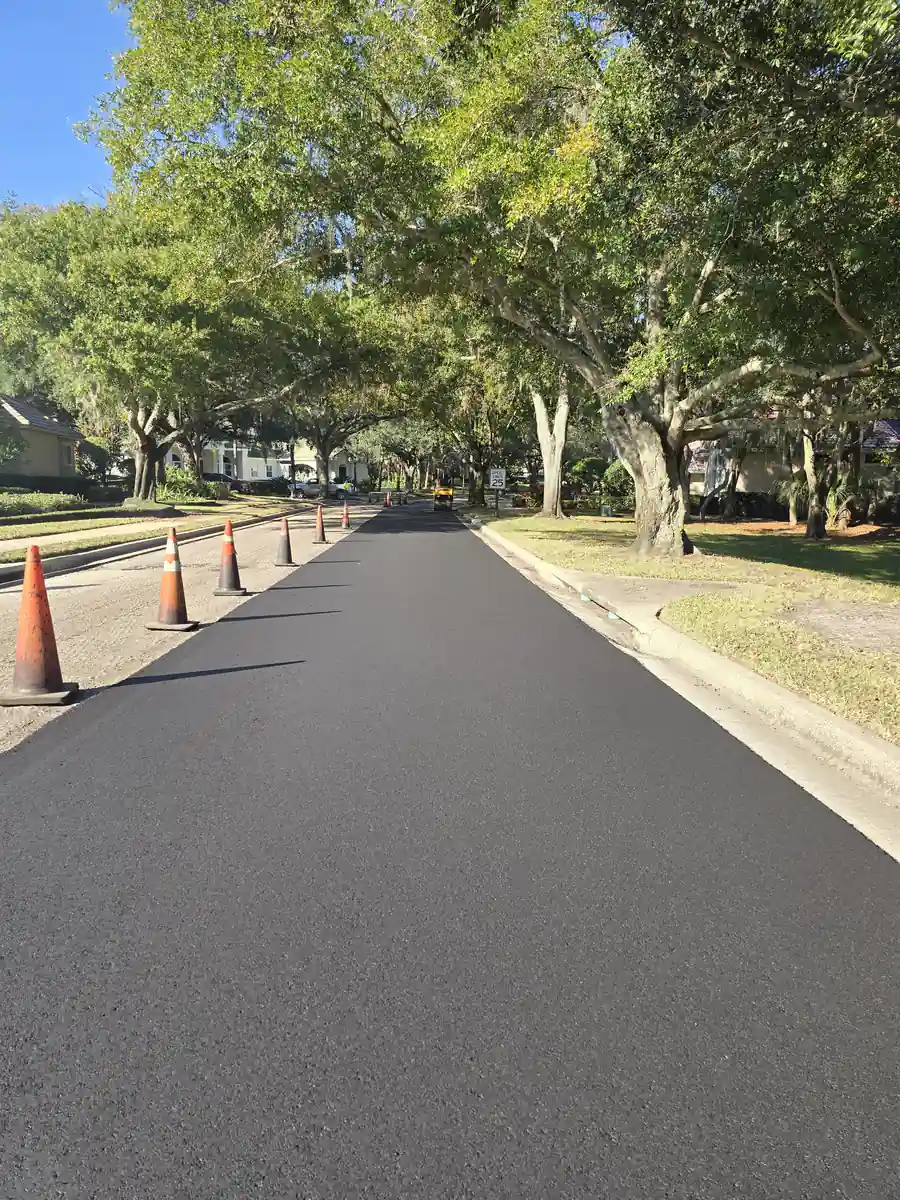
Residential Road ReplacementSanford, Florida
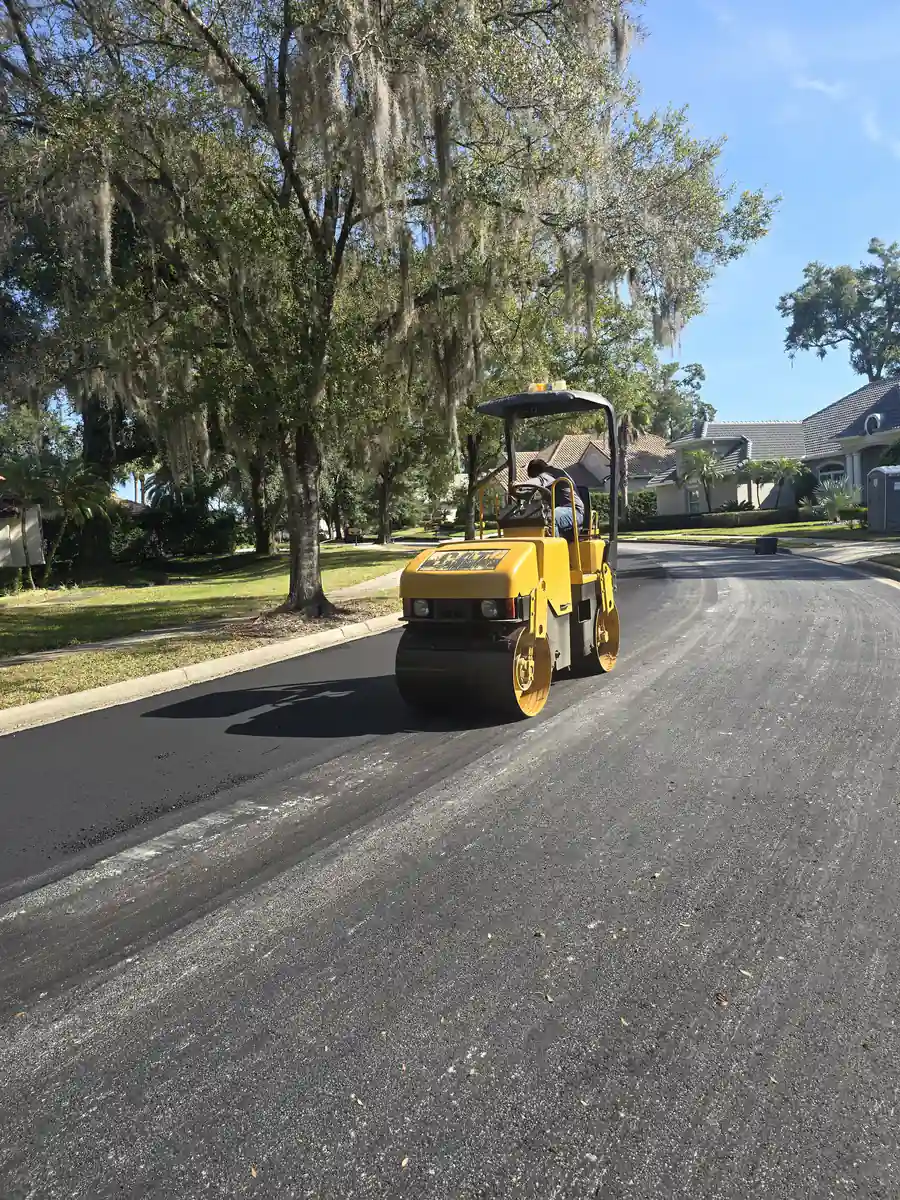
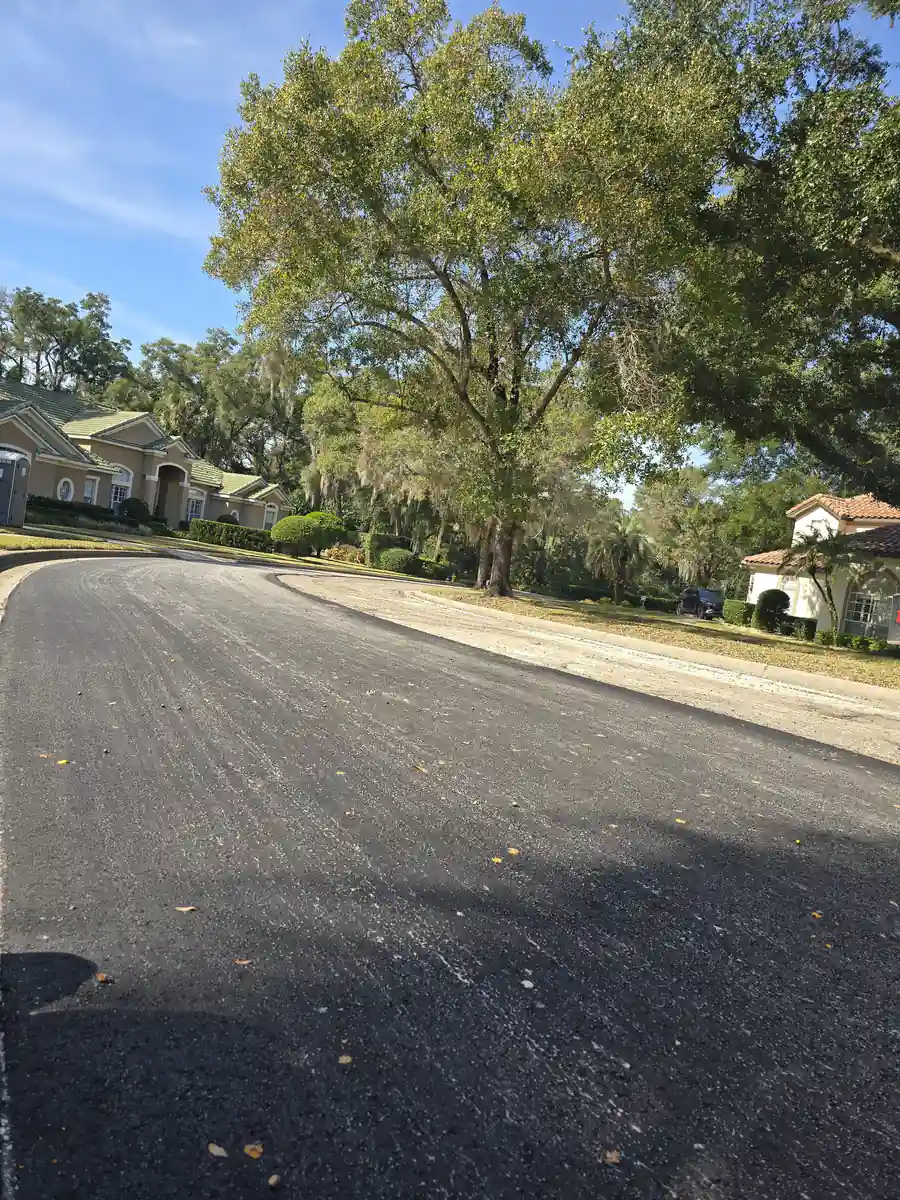
A residential street in Sanford taken out to the dirt and rebuilt from the base up, with the existing concrete curb left standing to set the finished grade. The photos below run from the first tear-out to the last pass of the roller.
Project at a glance
- Location
- Sanford, Seminole County
- Scope
- Full-depth removal and replacement
- Traffic
- One lane open throughout
- Property Type
- Residential street
The Decision
Why tear a residential street out to the dirt instead of paving over it?
Because the problem was underneath. An overlay fixes what you can see, and on this street what you could see was the symptom rather than the cause.
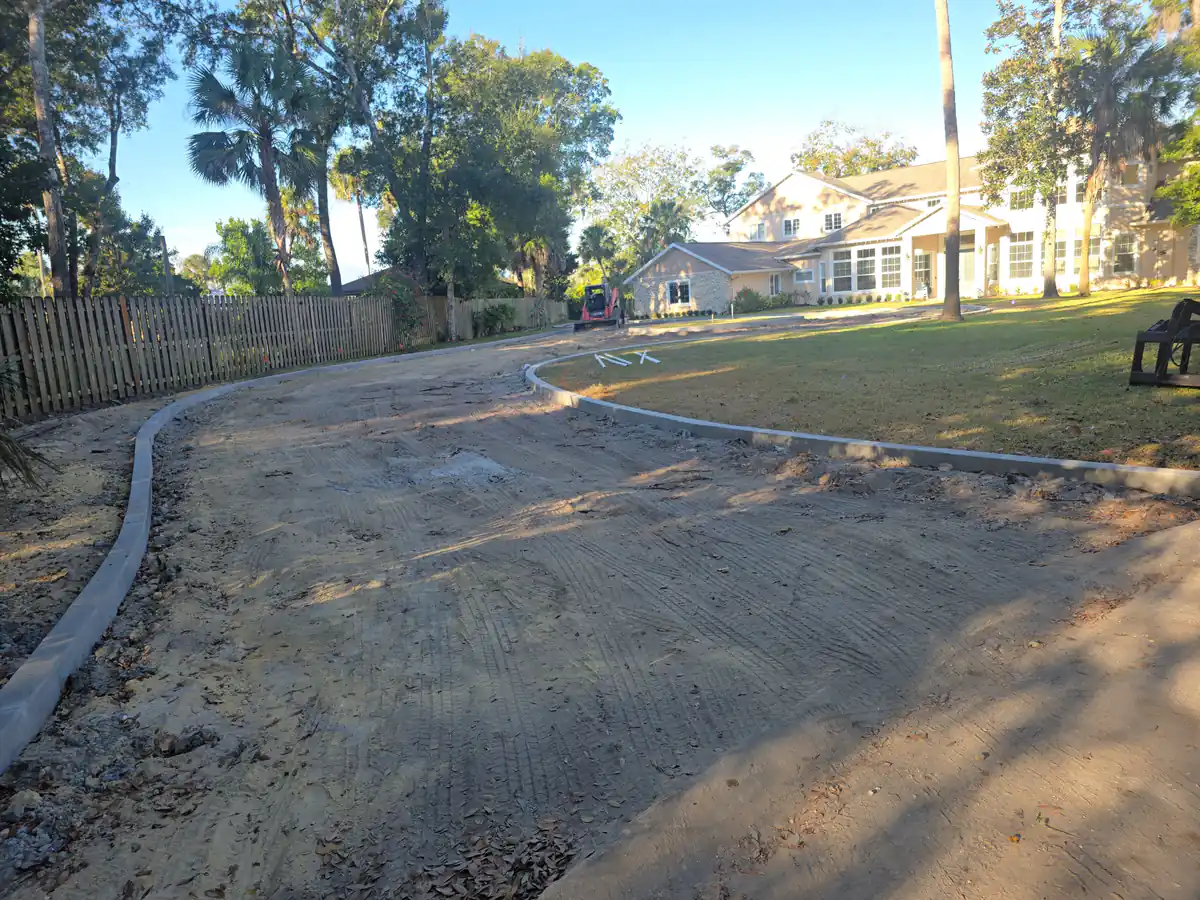
This is the road with nothing left of it. Bare sand, old base, and the concrete valley gutter still running down both edges. That is day one of a full-depth replacement. When a base has gone soft, a new surface telegraphs the same cracks back through within a couple of summers, and the owner has paid for a road twice.
Sanford soil is mostly sand, which drains well right up until a band of clay or buried organics sits in the way. Then water travels sideways and parks under the pavement where nobody can see it. You do not diagnose that from the curb. It shows up the moment the old surface comes off, which is why M&S Asphalt Paving would rather open a street up than guess. Juan spent a long stretch of his 22 years in asphalt on DOT road work, where nobody signs off on a section without knowing what is under it. Our asphalt paving in Sanford page covers how we scope this for boards and associations.
On The Job
What happens between tearing the old road out and laying the new one?
Grading and compaction. That is the whole middle of the job, and it is the part nobody photographs because it does not look like much.
The existing curb and gutter sets every elevation on the street, so the base has to be cut to land the finished asphalt flush against that concrete lip. Too high and the gutter pan stops carrying water. Too low and you have built a trough that collects it. The crew shapes a consistent cross fall toward the gutter, compacts the base in lifts, then runs a loaded truck over it to see whether anything moves. Soft spots get dug out, not rolled harder. A spot that pumps under a truck will pump under traffic.
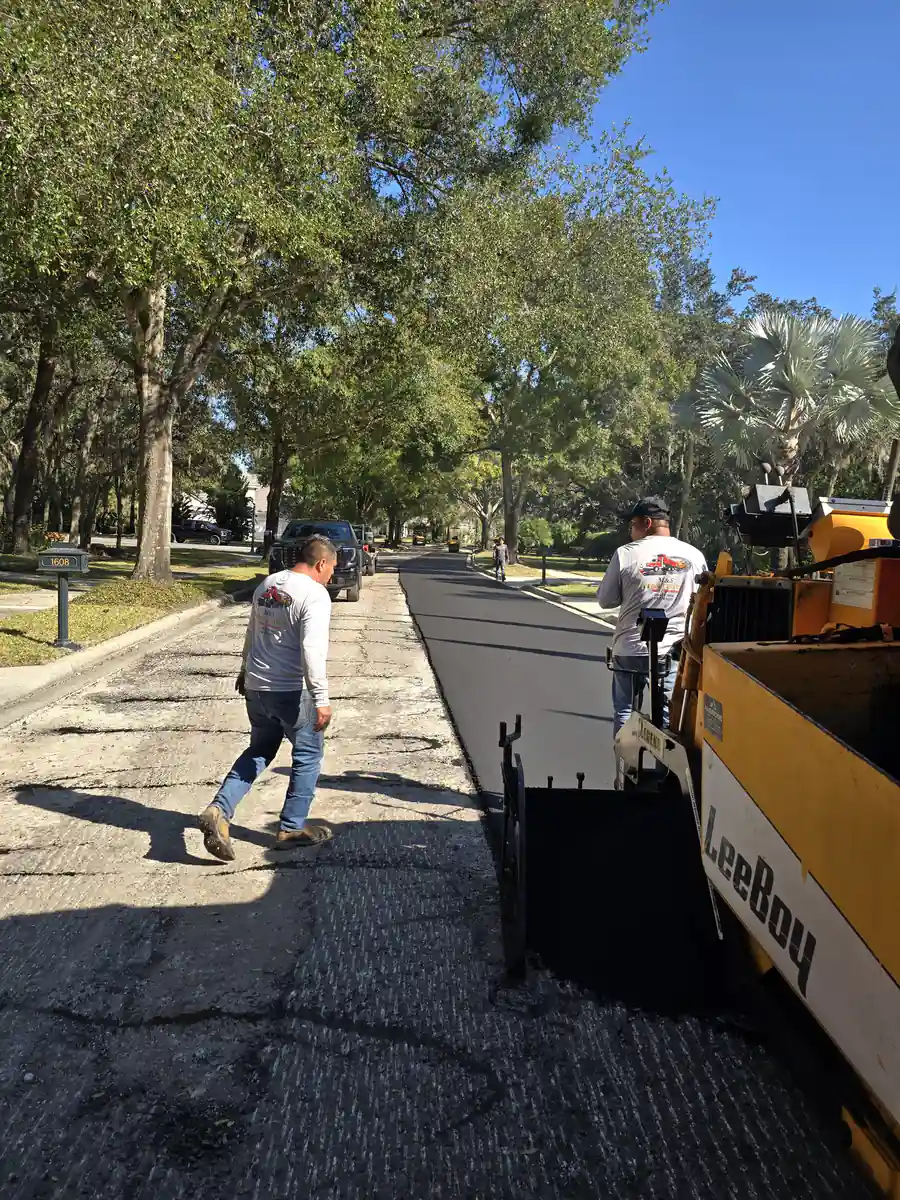
Then the paver goes to work. In the photo the LeeBoy is walking a fresh mat out under the oaks while raw base still runs ahead of it, with the screed operator riding the edge and a laborer working the joint by hand. Our standard mat is two inches. The base work behind all of this is its own trade, covered on our sitework and site preparation page.
Start To Finish
What does the job look like from the first cut to the last pass?
Afterwards
How long does a rebuilt street like this stay smooth?
A surface we lay is built to give ten to fifteen years in Florida sun, and a full rebuild starts that clock over properly because the structure underneath is new too. Materials carry a one year warranty.
What shortens it is almost always water or roots. Water gets in through cracks nobody sealed and works on the base until the surface starts to move. Roots are slower. They lift the mat from below until a ridge runs across the road, and on a street shaded by live oaks this old that is worth watching along the curb line. Turning loads matter too, so driveway aprons go first, along with anywhere a garbage truck pivots every week.
Keeping it is cheaper than replacing it, which is the honest advice rather than the sales pitch. Sealing on a sensible cycle with asphalt sealcoating keeps water and UV off the binder, and getting to a crack while it is still a crack is the difference between a small bill and a big one. When something does open up, crack filling and repairs at the right time will usually add years. We will tell you when a road needs work and when it does not.
Want to see another job?
The DeLand street was the other side of this decision. The base there was still sound, so the crew milled the old surface off and overlaid it instead of rebuilding.
Have a street that needs more than another overlay?
Call and tell us what you are seeing. We come out, look at the cracking pattern and where water sits, and tell you honestly whether the road needs rebuilding or whether an overlay will still do the job. Most estimates go out same day or next day.
Call us today (386) 215-7466